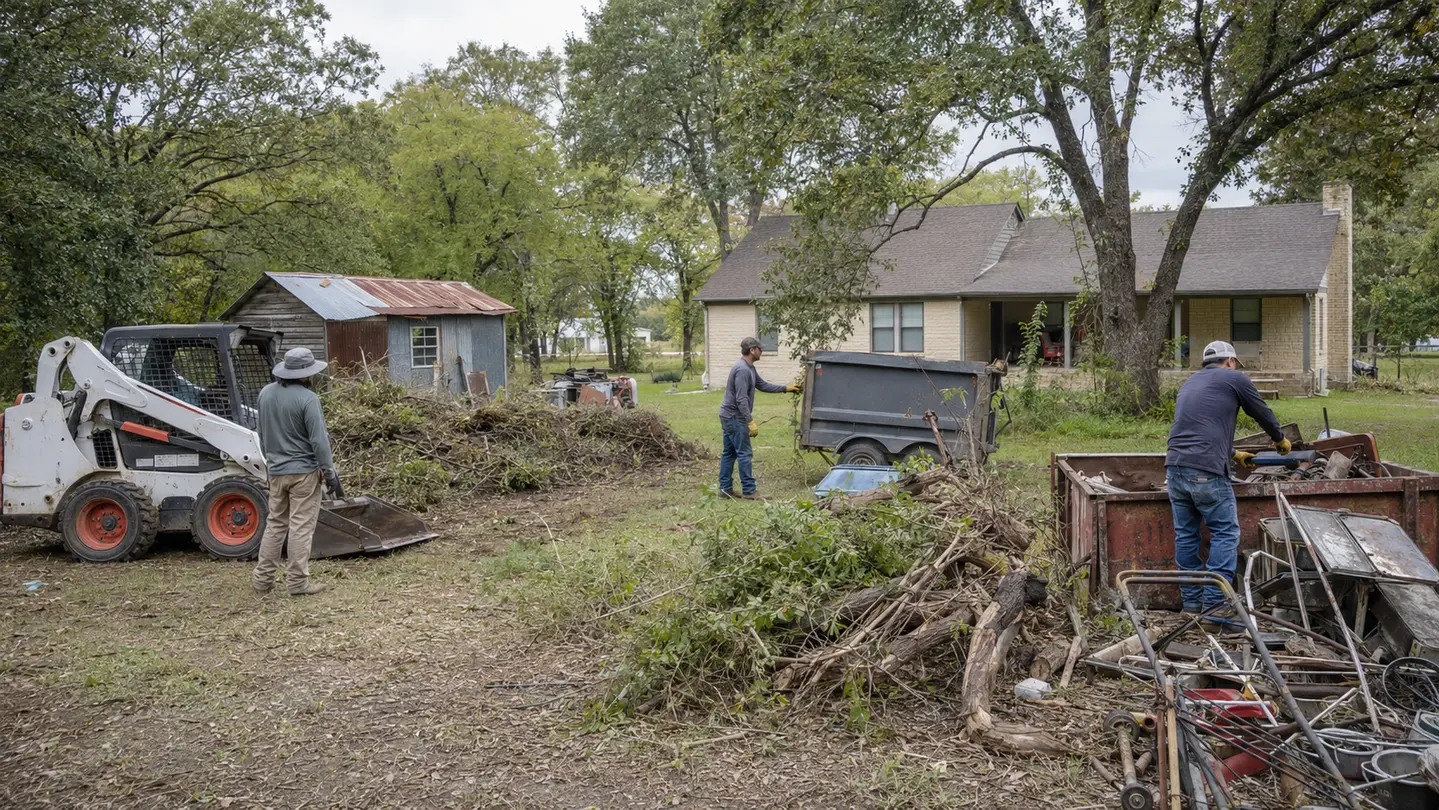
Confirm authority before material moves
The executor, administrator, trustee, or authorized owner should be identified before cleanup begins. Probate, multiple heirs, pending sales, tenants, liens, disputed equipment, and shared access can complicate approval. Contractors should know who can authorize removals and changes.
Property boundaries, easements, shared drives, neighboring equipment, and unclear ownership should be resolved before machinery enters the site. Moving the wrong tractor or clearing beyond an uncertain line can create a larger problem than the original cleanup.
Inventory what stays, sells, donates, and leaves
Walk every building and work area before demolition or machine loading. Mark family property, documents, photographs, firearms, titles, tools, usable equipment, valuable metal, active utilities, desirable trees, and structures that remain. A written or photographed inventory reduces confusion later.
Large agricultural property often contains equipment with uncertain operating condition and ownership history. Non-running machinery may still have value, but loading, transport, tires, locked brakes, missing components, and access can exceed casual estimates. Decide whether items are retained, sold separately, or included in removal.
Evaluate structures and hidden conditions
Old houses, mobile homes, barns, sheds, wells, septic systems, tanks, foundations, burn areas, and dumping sites should be documented before a cleanup price is finalized. Dense vegetation can conceal wire, concrete, pits, and debris. Unsafe buildings should not be entered without an appropriate assessment.
Chemicals, pesticides, oils, batteries, fuel tanks, refrigerants, asbestos-containing material, sealed drums, and unknown liquids may require separate testing or handling. These conditions should be identified early so the general cleanup does not stop after equipment has mobilized.
Build the cleanup around the property decision
A property being listed may need unsafe structures, visible accumulation, and access problems addressed first. A tract being divided may require work limits tied to parcel boundaries. A future homesite may need demolition, foundation removal, brush clearing, backfill, and rough site preparation.
Phasing can be useful when heirs need time to make decisions. One phase can secure access and remove immediate hazards; another can clear structures or equipment; a final phase can address concrete, brush, smaller surface debris, and grading. Each phase should have a defined handoff.
Inherited Property Cleanup Questions
Can cleanup begin before probate is complete?
That depends on ownership and legal authority. The person approving work should be able to document authority to enter the property and remove or demolish the items included in the scope.
How should family members identify retained items?
Use photographs, durable markings, a written inventory, and restricted work zones. Do not rely only on verbal instructions given while machinery is operating.
Can an inherited property be cleaned remotely?
Potentially. The authorized decision-maker should provide access, clear approval limits, retained-item instructions, and a communication process for unexpected conditions or scope changes.
Use This Guide to Prepare for an Evaluation
General information is a starting point. A responsible cleanup plan must account for the actual property, authority to approve the work, structures and material, access, utilities, specialty concerns, equipment and hauling needs, disposal destinations, and the required handoff.
Call Texas Property Cleanup at 817-818-JUNK or text project photos with the location, approximate acreage, and a description of what the property needs to become.