What This Service Covers
Land cleanup is rarely a single-load hauling job. On larger tracts, the work may involve scattered dumping, collapsed structures, fence lines, equipment, scrap, brush piles, dead trees, concrete, tires, and buried material spread across multiple work areas.
We begin with the outcome the owner needs. A tract being prepared for sale may require visible hazards, debris, and derelict structures removed. A future homesite may need access opened, vegetation reduced, old improvements demolished, and rough grades restored. Commercial or development property may require a more controlled sequence involving demolition, hauling, excavation, and final machine cleanup.
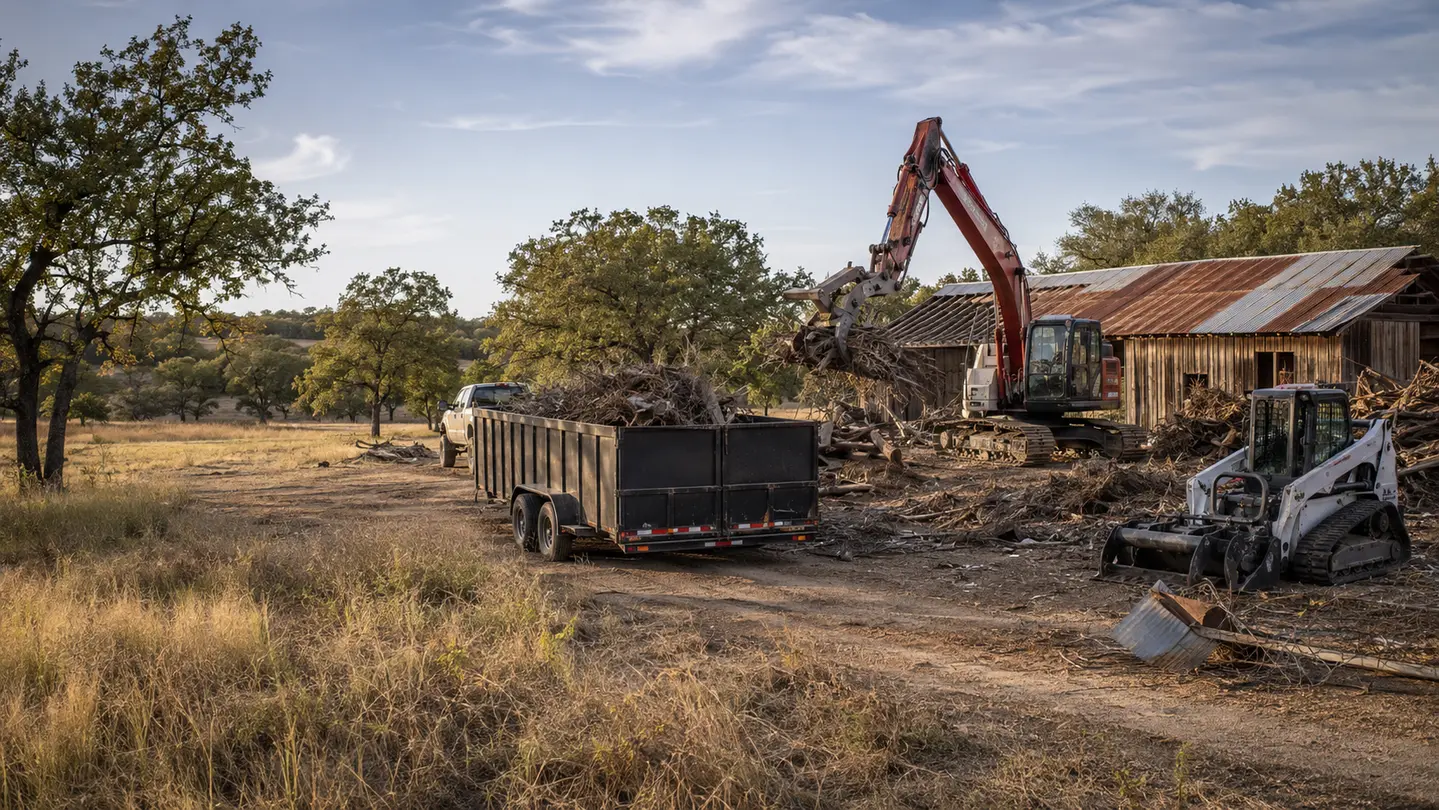
Work That Can Be Included
- Illegal dumping and scattered debris removal
- Abandoned equipment, implements, trailers, and scrap
- Old fencing, gates, posts, wire, panels, and corrals
- Shed, barn, house, mobile-home, and outbuilding demolition
- Brush piles, fallen trees, stumps, and dense overgrowth
- Concrete, foundations, pads, and buried debris excavation
- Loading, hauling, legal disposal, recycling, and salvage routing
- Backfill, rough grading, access improvement, and final machine cleanup
What the Work Can Involve
These additional representative scenes show common work phases and planning considerations. They illustrate service types only and are not presented as completed Texas Property Cleanup projects.
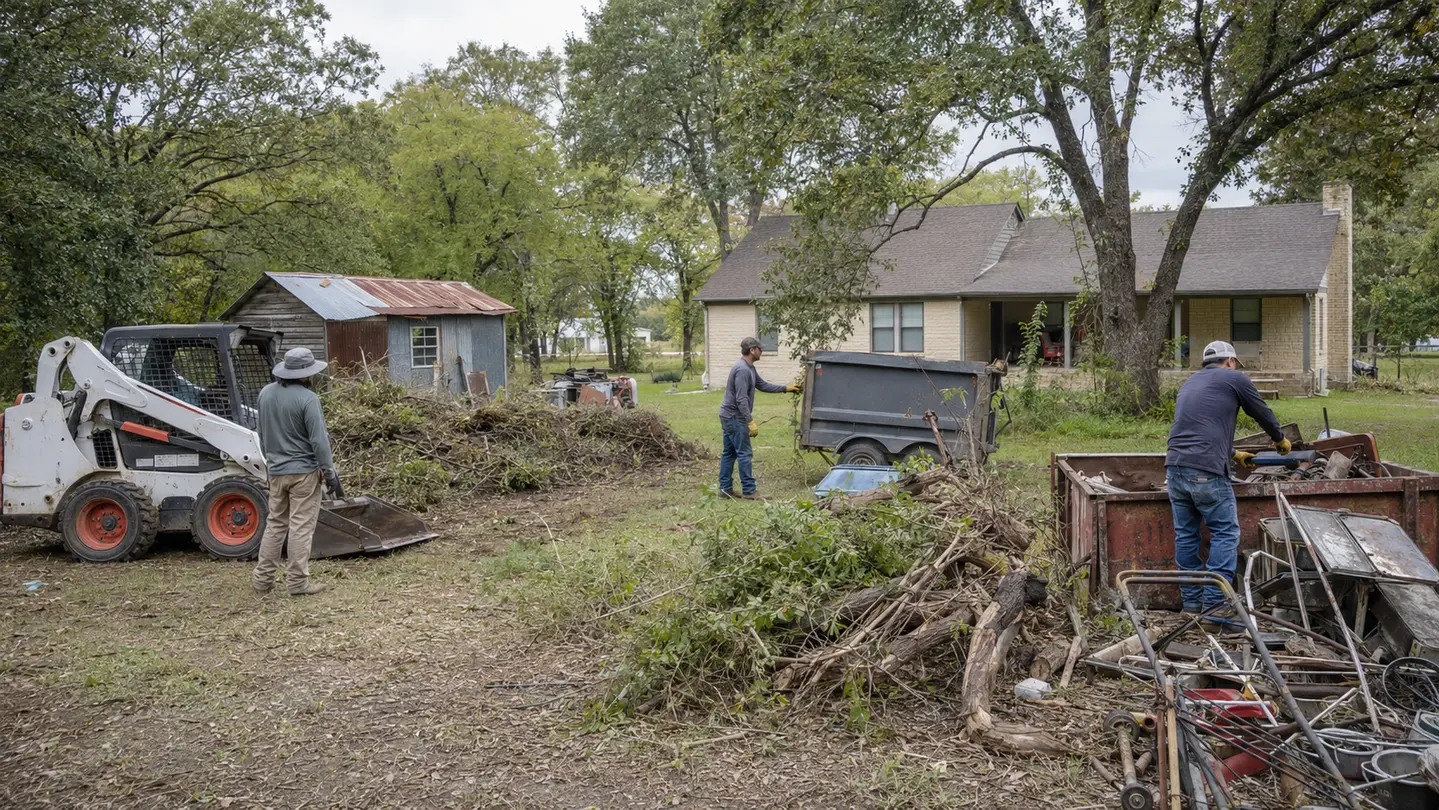
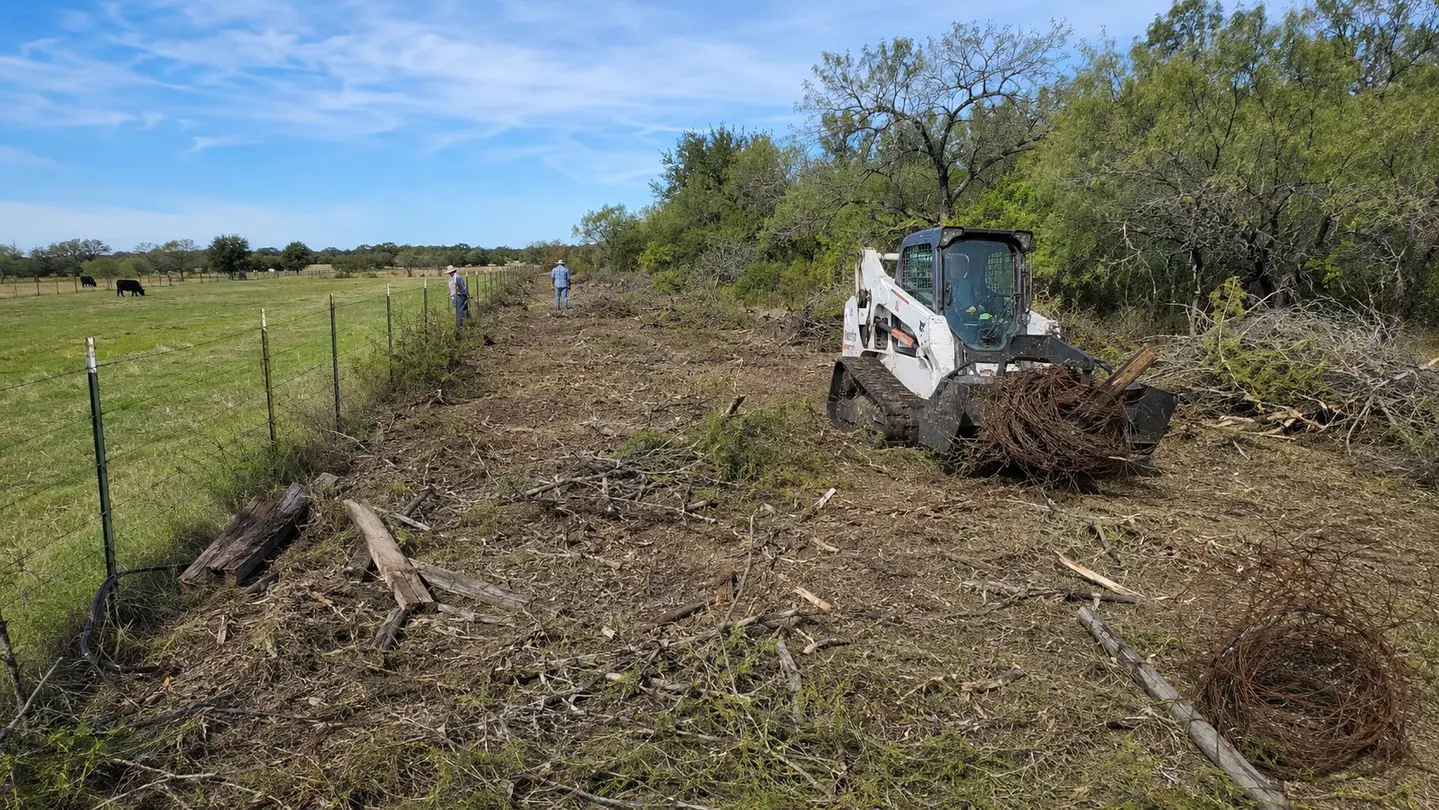
Projects We Evaluate
Inherited acreage
Clear years of accumulated material and unsafe improvements before a family sale, partition, transfer, or new use.
Development preparation
Remove obstacles that interfere with surveying, access, utility work, grading, construction, or resale.
Rural dumping cleanup
Collect and load mixed waste spread through tree lines, low areas, fence lines, and former burn or storage areas.
Property reset
Take a neglected tract from uncontrolled accumulation to a defined, manageable condition.
A Complete-Property Approach
The practical sequence matters. We separate salvageable equipment and metals when appropriate, remove structures in a controlled order, open access for trucks and machinery, consolidate scattered material, excavate what cannot be collected from the surface, and finish the disturbed areas to the agreed condition.
When several scopes overlap, we can combine this service with demolition, heavy debris removal, brush clearing, or cleanup excavation and dirt work. That gives the owner one defined finished condition instead of a collection of disconnected tasks.
How the Right Resources Are Assigned
Texas Property Cleanup is responsible for evaluating the complete scope and organizing the resources the property requires. Depending on the job, that can involve specialized demolition contractors, equipment operators, hauling companies, recycling or salvage outlets, disposal facilities, and specialty providers. The project is built around capability and site conditions rather than forcing every property into one crew or one equipment package.
The owner receives a defined point of contact for the cleanup plan, major work limits, expected handoff, and changes that arise from conditions that could not reasonably be seen before work began. This approach is especially useful on high-value projects where demolition, loading, hauling, vegetation, concrete, and excavation overlap.
What a Complete Handoff Looks Like
A successful handoff is based on the agreed work limits: identified structures and materials removed, retained property protected, access restored where included, and disturbed cleanup areas left in the defined condition. The scope should say whether foundations, brush, smaller surface debris, backfill, and rough grading are included.
Land Cleanup Versus Land Clearing
The terms are often used together, but they describe different parts of a project. Land clearing generally concentrates on vegetation: brush, volunteer trees, deadfall, stumps, and growth that blocks access or future work. Land cleanup addresses the broader condition of the property. It may include vegetation, but it can also include buildings, fencing, machinery, scrap, concrete, tires, dumping, stored materials, storm damage, and debris spread across acreage.
A tract can be cleared of brush and still be unusable because a collapsed barn, abandoned equipment, wire, concrete, or buried debris remains. It can also be free of obvious trash but inaccessible because tree growth and old fence lines prevent trucks and machinery from reaching the work areas. The strongest plan considers both problems and defines the final condition before equipment is mobilized.
Land Cleanup for Different Property Types
Ranches and working land
Remove obsolete corrals, damaged fencing, tanks, feeders, equipment, barns, storm debris, brush piles, and accumulated material while protecting active improvements and livestock areas.
Farms and agricultural sites
Evaluate non-running machinery, implements, irrigation components, sheds, bins, wire, tires, tanks, pallets, lumber, roofing, and material left from earlier operations.
Inherited and estate property
Separate retained items and useful equipment from years of accumulated material before a sale, transfer, division, redevelopment decision, or return to productive use.
Commercial and development tracts
Remove obsolete improvements, exterior storage, illegal dumping, concrete, vegetation, and access obstacles before surveying, grading, utility work, construction, or marketing.
Structures, Equipment, Fencing, and Heavy Material
Large land-cleanup projects often contain material that cannot be handled safely or efficiently by hand. Houses, mobile homes, barns, sheds, shops, decks, corrals, and other structures may require controlled demolition. Tractors, implements, trailers, tanks, and non-running machinery may require lifting, winching, dismantling, or specialized transport. Old wire and fencing can be tangled through vegetation or buried beneath years of growth.
Concrete and foundations create a separate layer of work. Slabs, piers, footings, troughs, pads, and broken concrete may need to be broken, excavated, loaded, and hauled. If foundation removal leaves voids or disturbed areas, the scope should state whether backfill and rough grading are included. Defining these details prevents the owner from receiving a cleared surface with unfinished holes, buried remnants, or a second project still waiting underneath.
How a Large Land Cleanup Is Planned
- Define the objective. Identify whether the land is being prepared for sale, development, construction, agricultural use, an ownership transfer, improved access, or general risk reduction.
- Map the work areas. Note structures, equipment yards, dumping areas, fence lines, brush piles, roads, drainage areas, concrete, utilities, and sections that must remain untouched.
- Identify retained property. Mark usable machinery, valuable metal, family property, active fences, desirable trees, buildings, utilities, and materials that should stay.
- Evaluate access and production. Gate width, road condition, slopes, mud, bridges, low branches, overhead lines, turning space, and distance between work zones affect equipment and trucking.
- Separate material streams. Demolition debris, metal, equipment, concrete, vegetation, tires, general waste, and regulated or specialty materials may require different handling and destinations.
- Set the final condition. State whether foundations are removed, holes are backfilled, brush is hauled, disturbed areas are rough-graded, access is reopened, and smaller surface material receives a final machine cleanup.
What Must Be Identified Before Work Begins
Unknown material is one of the fastest ways to interrupt a cleanup. Fuel, oils, batteries, refrigerants, propane cylinders, sealed tanks, chemicals, pesticides, asbestos-containing material, contaminated soil, wells, septic systems, utility lines, and unidentified drums may require testing, documentation, disconnection, or a specialty provider. They should be disclosed during planning rather than discovered after demolition or loading begins.
Ownership and authorization matter as well. Estate representatives, investors, buyers, sellers, and contractors should confirm who has authority to approve removal. Property boundaries, easements, shared roads, neighbor access, and disputed equipment should be resolved before machinery enters the site.
Choose the Finished Condition, Not Just the Removal List
A strong land-cleanup agreement describes the property at handoff. One owner may need only a dumping area removed. Another may need a homesite cleared of structures, slabs, fencing, and vegetation with holes backfilled and access restored. A development tract may need defined areas opened for survey crews and future grading without disturbing vegetation outside the limits of work.
Useful finish descriptions include “structure and slab removed with the excavation backfilled,” “all visible dumping collected from the marked tree line,” “equipment yard cleared while identified machinery remains,” or “brush and fencing removed from the future access route.” Specific outcomes create clearer pricing, better production decisions, and fewer disagreements about what cleanup means.
Who Uses Texas Land Cleanup Services?
Projects are evaluated for landowners, ranch and farm families, heirs, estate representatives, investors, real-estate professionals, commercial owners, property managers, builders, contractors, and development teams. The work can cover an entire tract or a defined section such as a ranch headquarters, inherited homesite, equipment yard, road frontage, illegal-dumping area, future building pad, or storm-damaged portion of the property.
Texas Land Cleanup is not positioned as ordinary curbside junk removal. The focus is substantial property work where acreage, structures, machinery, vegetation, concrete, heavy debris, or several overlapping scopes require equipment, trucking, disposal planning, and a clearly defined finish.
North Texas Conditions Affect the Cleanup Plan
Properties west of Dallas–Fort Worth range from developed commercial tracts and acreage homesites to working farms, ranches, wooded land, lake-area property, and remote inherited acreage. A project close to Fort Worth may require tighter staging, controlled truck movement, and protection for neighboring improvements. A rural job may involve narrow gates, long internal roads, soft ground, creek crossings, livestock, limited turning space, and several work zones separated by acres.
Terrain and weather matter. Heavy trucks and loaded equipment can damage a road or become unproductive when the ground is saturated. Dense vegetation can conceal wire, concrete, wells, dumping, and equipment. Rocky areas may change excavation production, while clay soils can affect access and backfill. These conditions do not automatically prevent the work, but they need to be considered when equipment, sequence, and timing are selected.
Our primary service area includes Parker, Tarrant, Wise, Johnson, Hood, Palo Pinto, Jack, and Young counties. That coverage includes communities such as Aledo, Weatherford, Fort Worth, Azle, Springtown, Granbury, Cleburne, Decatur, Mineral Wells, Jacksboro, and Graham. Substantial projects outside the listed area may be evaluated when the scope supports the additional mobilization.
Preparing for the First Project Conversation
Photos and video should show the scale of the property rather than only the largest debris pile. Include the entrance, roads, gate openings, structures, machinery, concrete, vegetation, dumping areas, utilities, and nearby improvements. A simple property map with work areas marked can be especially useful when material is spread across acreage.
Be prepared to explain what must remain and what the land should be ready for next. Sale preparation, a future homesite, commercial development, agricultural reuse, improved access, and general liability reduction can require different finish standards. Honest information about access, specialty materials, unsafe structures, and buried debris makes the initial evaluation more useful and reduces avoidable changes later.
Pricing and Property Evaluation
Large cleanup projects are priced from the actual scope. Acreage, material volume and weight, structures, access, haul distance, disposal requirements, equipment needs, terrain, utilities, specialty materials, and the requested finish all matter. Photos and video are useful for an initial conversation, but complex sites may require an in-person evaluation.
Read our large property cleanup cost guide for a detailed explanation of equipment, weight, access, demolition, disposal, and finished-condition variables.
Call 817-818-JUNK with the property location, approximate acreage, major items to remove, access conditions, and what you want the site to look like when the work is complete.
Texas Land Cleanup Questions
Can you clean only part of a large property?
Yes. The scope can focus on a homesite, barn area, fence line, equipment yard, dumping area, future building pad, or another defined section.
Do you remove abandoned machinery and scrap?
Yes. Machinery, implements, trailers, tanks, metal, and mixed equipment can be evaluated for removal, salvage, hauling, or specialty handling.
Can land cleanup include demolition and dirt work?
Yes. Structure removal, foundation removal, excavation, backfill, and rough grading can be included when they are part of the complete cleanup plan.
Is land cleanup the same as land clearing?
Not exactly. Land clearing usually focuses on trees, brush, stumps, and vegetation. Land cleanup can include those materials along with structures, machinery, fencing, concrete, dumping, scrap, tires, and accumulated debris. Many large projects require both.
Can you prepare land for sale or development?
Yes. The scope can be built around improving access, removing visible liabilities and unwanted improvements, clearing defined work areas, and leaving the tract in an agreed condition for listing, surveying, grading, construction, or another next step.
What information is needed for an initial evaluation?
Provide the property location, approximate acreage, photos or video, major structures and materials, equipment or vehicles, vegetation, gate and road conditions, known utilities or specialty materials, and the finished condition you need.
Do you handle tires, tanks, oils, chemicals, or unknown drums?
These materials must be identified during planning. Some may require testing, draining, documentation, separate transportation, or a licensed specialty disposal provider before the general cleanup can proceed.
How is a large land cleanup priced?
Pricing is based on the actual scope, including labor, equipment, material volume and weight, demolition, access, terrain, hauling distance, disposal requirements, specialty handling, and the requested final condition.
Serving North Texas
Texas Property Cleanup serves Parker, Tarrant, Wise, Johnson, Hood, Palo Pinto, Jack, and Young counties, with substantial projects considered throughout the region. Visit our service-area directory for city and county details.
Texas Land Cleanup Service Areas
Use these local guides for property conditions, access, material, and planning details in priority North Texas service areas. Additional cities and counties are covered through our complete service-area directory.