Complete Property Cleanup From One End of the Site to the Other
Texas Property Cleanup clears large residential, commercial, agricultural, ranch, farm, and undeveloped properties throughout North Texas. We take on substantial cleanup projects that require more than a small hauling crew and a utility trailer. When a property has old structures, abandoned equipment, damaged fencing, accumulated debris, overgrown brush, downed trees, scrap material, or years of unwanted material spread across the land, we bring together the equipment, manpower, hauling capacity, and disposal resources needed to clear it.
Our work is centered on one objective: preparing property for what comes next.
That may mean clearing a ranch before it is listed for sale, cleaning up an inherited rural property, removing structures before site development, clearing an old farmstead, cleaning commercial acreage, preparing land for new construction, or restoring access to property that has become buried beneath debris and vegetation. Every project is different, so we evaluate the property, determine what must be removed, identify the equipment and hauling requirements, and build a cleanup plan around the actual conditions on the ground.
Large properties rarely have only one problem. A ranch cleanup may include a collapsed barn, old fencing, abandoned implements, scrap metal, brush piles, dead trees, discarded building materials, tires, and general debris scattered across several acres. A redevelopment site may require house demolition, slab or foundation removal, excavation, debris hauling, grading, and final site cleanup. An inherited property may contain an unsafe home, sheds, vehicles, equipment, household contents, and decades of outdoor accumulation.
Handling each part through a different company can slow the project down and leave the property owner coordinating demolition contractors, hauling companies, equipment operators, tree crews, and disposal facilities. Texas Property Cleanup is built around complete projects. We look at the whole property, not one isolated pile.
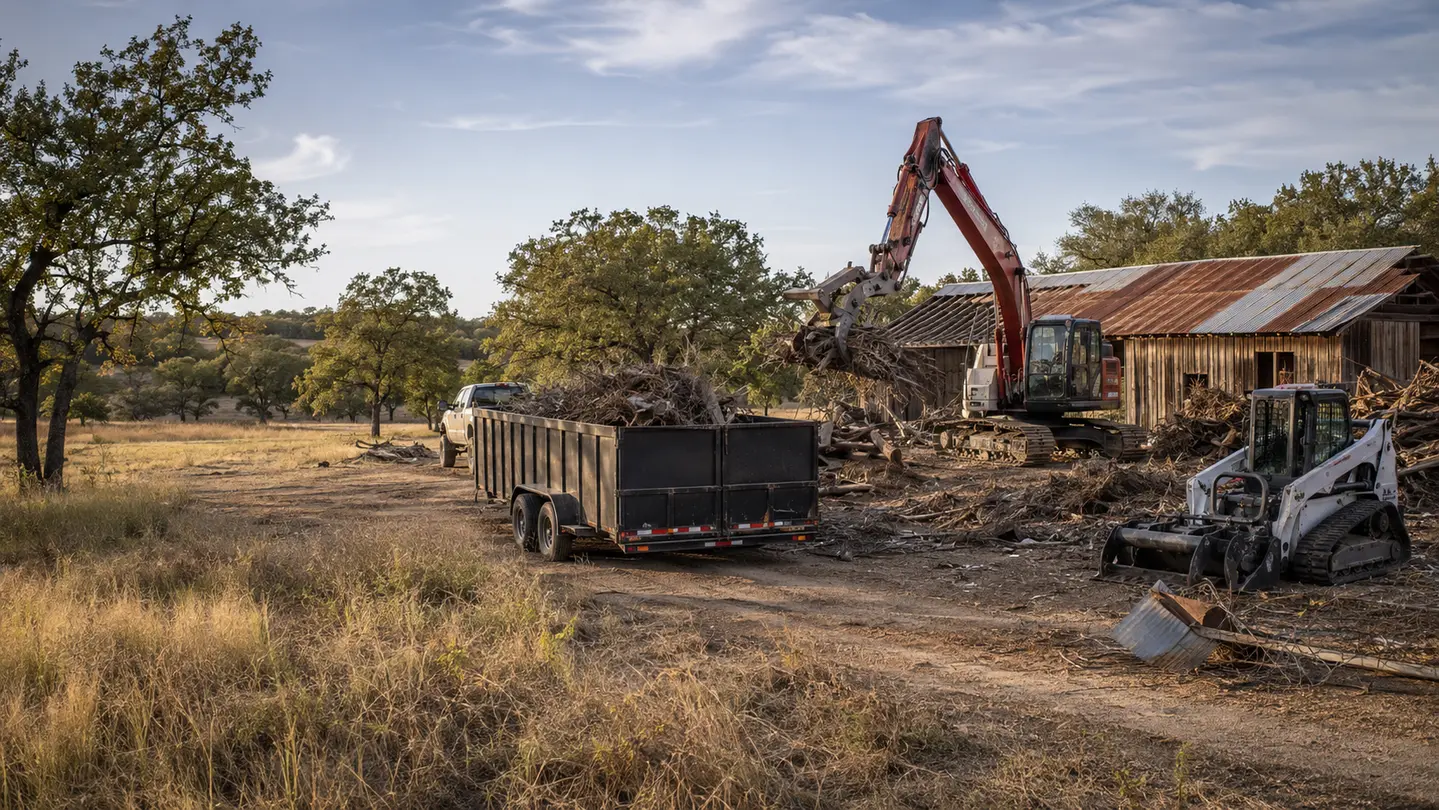
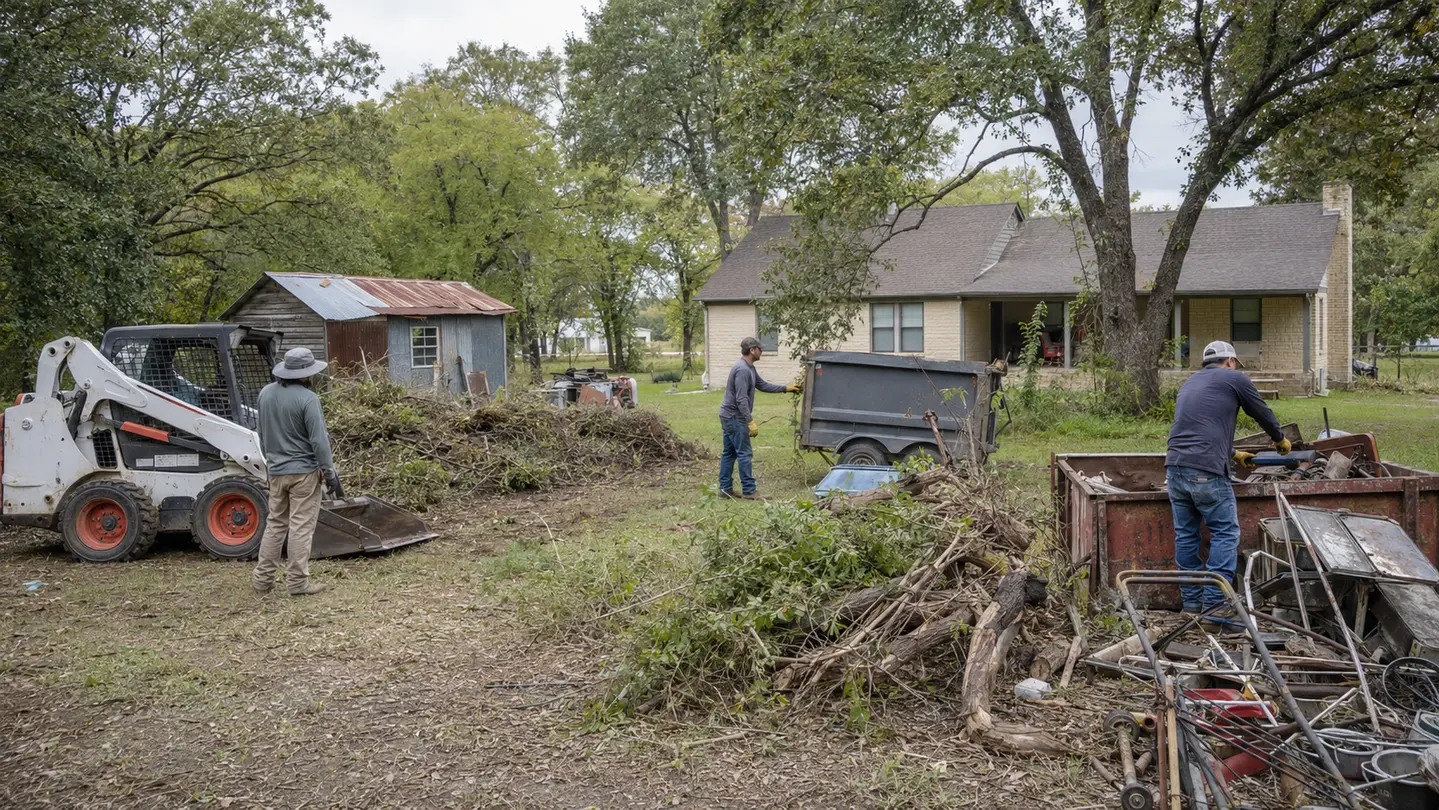
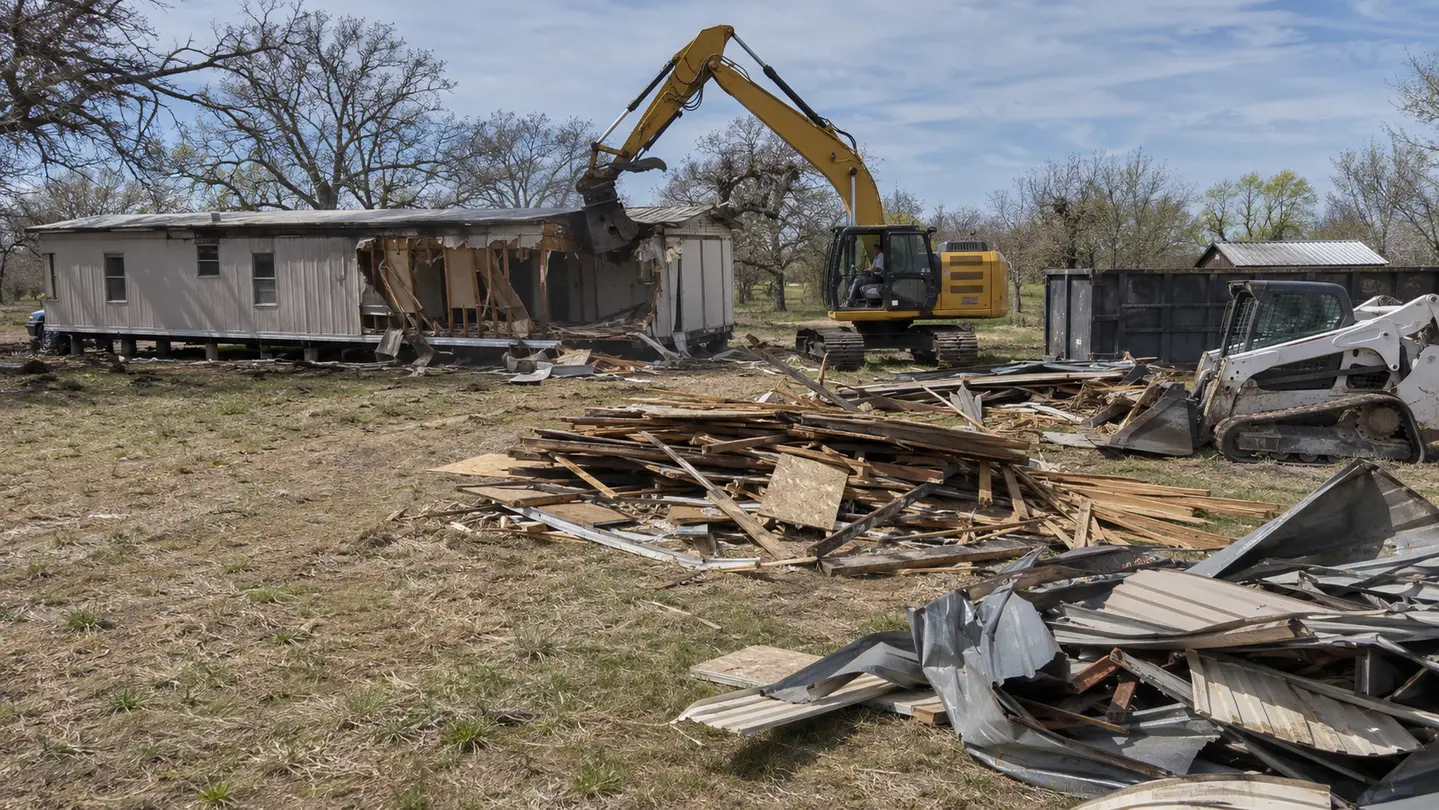
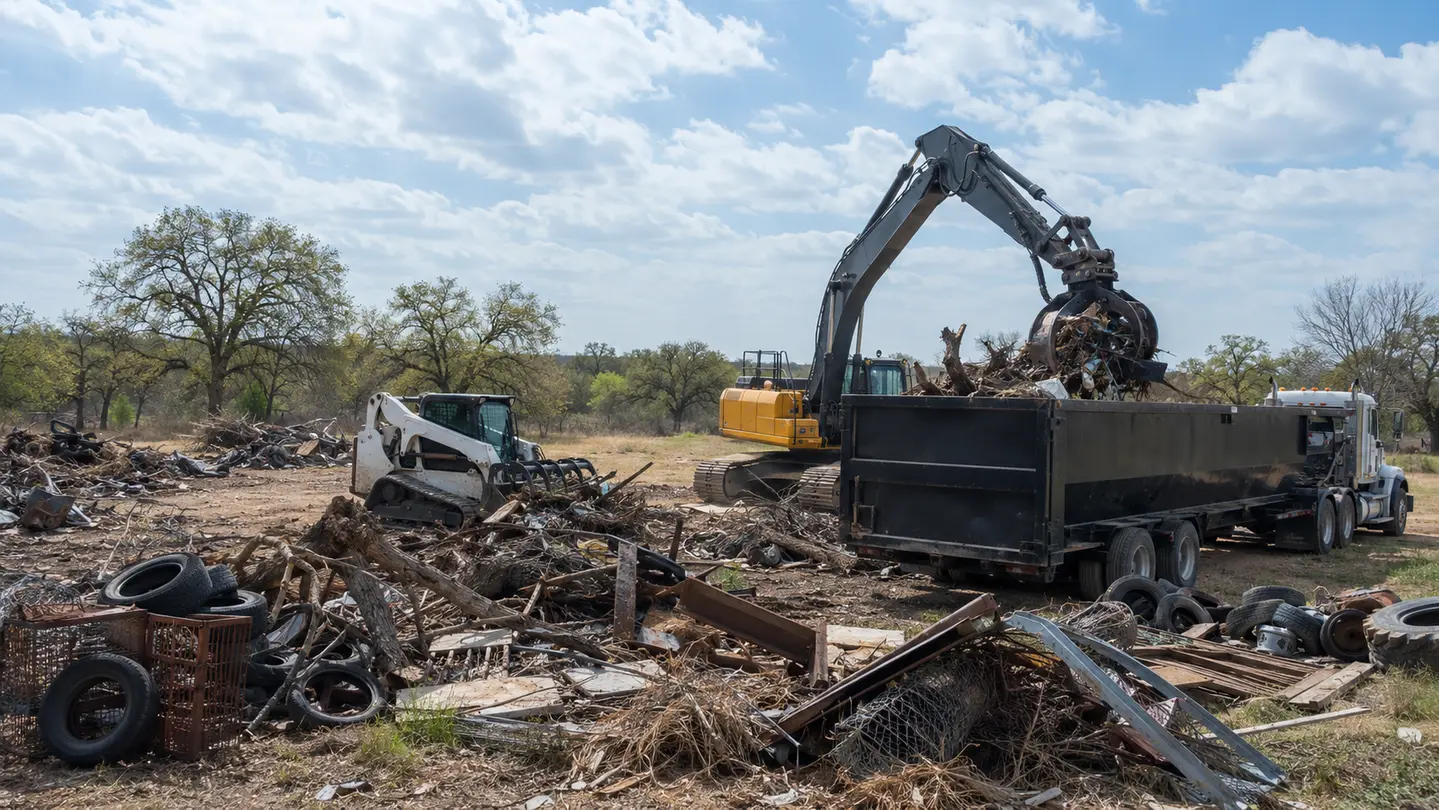
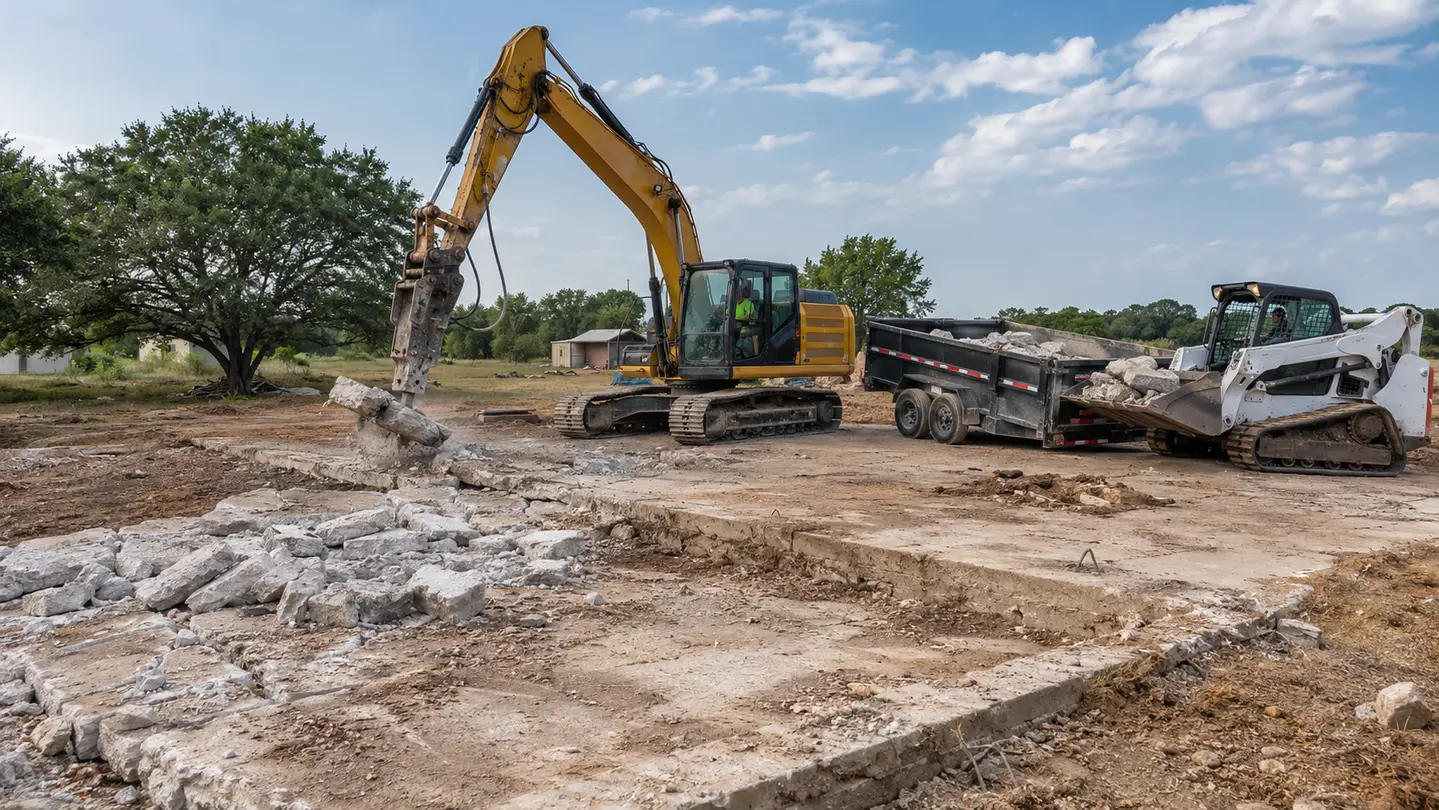
Depending on the site, a complete property cleanup may involve:
- Houses, mobile homes, barns, sheds, garages, decks, porches, carports, corrals, pens, and other structure removal
- Interior and exterior contents removal before demolition
- Old fencing, gates, posts, wire, panels, and livestock enclosure removal
- Abandoned farm equipment, machinery, implements, trailers, tanks, vehicles, and scrap removal
- Construction debris, demolition debris, illegal dumping, storm debris, household debris, and mixed material removal
- Brush piles, tree piles, limbs, logs, stumps, dead trees, and overgrowth removal
- Excavation, dirt work, rough grading, backfilling, trenching, and site preparation
- Loading, hauling, recycling, salvage coordination, and legal disposal
- Final cleanup so the land is ready for sale, construction, redevelopment, agricultural use, or its next purpose
The exact scope depends on the condition of the property and what the owner wants the finished site to look like. Some customers need everything cleared to bare ground. Others want selected buildings, trees, fencing, or materials preserved. We define those limits before work begins.
Large Property Cleanup
Property cleanup is the broadest part of what we do. It covers large sites with multiple categories of material, structures, vegetation, or equipment that must be removed. These projects often result from years of accumulation, vacancy, storm damage, illegal dumping, inherited property, neglected land, abandoned operations, or a change in ownership.
We can clear residential acreage, rural homesites, commercial tracts, investment properties, estates, industrial yards, storage properties, ranches, farms, and undeveloped land. The work may range from clearing a heavily accumulated homesite to cleaning dozens of acres containing scattered debris, old structures, machinery, and vegetation.
Before quoting a substantial cleanup, we need to understand access, acreage, material types, structure sizes, disposal requirements, equipment needs, environmental or utility concerns, and the owner’s intended outcome. Good planning matters because an acreage cleanup can require loaders, excavators, skid steers, dump trailers, roll-off containers, lowboys, dump trucks, specialty hauling, or multiple disposal and recycling destinations.
Our goal is not to move the problem from one corner of the property to another. The goal is to remove it and leave the property measurably closer to being usable, marketable, buildable, or productive.
Texas Land Cleanup and Acreage Clearing
Land cleanup focuses on clearing open acreage and undeveloped or partially developed property. Material may be concentrated in a few areas or spread across the entire tract. Common conditions include old dump sites, scattered metal, abandoned fencing, deteriorated structures, logging debris, brush piles, downed trees, discarded tires, concrete, construction material, and equipment left by prior owners.
We provide land cleanup for vacant lots, undeveloped acreage, rural residential land, future homesites, commercial and industrial tracts, hunting and recreational property, timber and agricultural land, investment property, and inherited land.
The cleanup plan can include selective removal or a complete clearing scope. Where appropriate, reusable metal and equipment may be separated from landfill debris. Concrete, brush, timber, and mixed waste may require different handling. Organizing those material streams can reduce unnecessary hauling and keep the project moving efficiently.
Land cleanup often overlaps with brush clearing, demolition, excavation, and dirt work. When those services are coordinated as one project, the property can move directly from its current condition toward sale, construction, access improvement, or future development.
Ranch Cleanup
Ranch cleanup requires an understanding of large acreage, heavy material, agricultural structures, fencing systems, livestock areas, machinery, and access conditions. The material on a working or former ranch is rarely equivalent to ordinary household debris.
Ranch cleanup projects may include:
- Barn, loafing shed, equipment shed, tack room, and outbuilding removal
- Corral, pen, chute, gate, panel, and fence removal
- Barbed wire, pipe fence, field fence, posts, and damaged perimeter fencing
- Stock tanks, water tanks, feeders, troughs, pipe, and scrap metal
- Tractors, implements, trailers, farm machinery, and non-running equipment
- Burn piles, brush piles, fallen trees, storm debris, and cleared vegetation
- Abandoned household contents and debris around old ranch homes
- Concrete, foundations, pads, and material left from prior structures
Some ranches need a full cleanup before sale. Others need specific sections cleared so a buyer, surveyor, contractor, or appraiser can access the land. We can work from a defined list of problem areas or evaluate the entire property and build a phased plan.
For high-volume ranch cleanups, the right equipment and hauling plan determine whether the work takes days or drags on for weeks. Texas Property Cleanup coordinates the resources needed for the actual scale of the job.
Farm Cleanup
Farm cleanup is driven by the structures, machinery, fencing, and operational material found on agricultural property. An inactive farm may still contain decades of equipment, implements, tanks, lumber, metal, wire, tires, containers, and deteriorated buildings. Even an active farm may need an old section cleared for expansion, new construction, drainage work, access, or a change in use.
Our farm cleanup services can include:
- Removal of tractors, combines, implements, trailers, and machinery
- Removal of non-running equipment and equipment parts
- Barn, shed, shop, and outbuilding removal
- Fence, gate, pen, post, wire, and panel removal
- Scrap metal, pipe, tanks, lumber, pallets, and accumulated material removal
- Brush, tree, stump, and vegetation clearing
- Cleanup of former equipment yards and storage areas
- Debris hauling and preparation for construction or agricultural reuse
We do not treat a farm cleanup like a basic cleanout. Heavy machinery, oversized material, embedded posts, concrete, fuel or chemical containers, and limited access require deliberate planning. Potentially regulated or hazardous material must be identified before removal so it can be handled through the proper channel.
Demolition and Structure Removal
Old or unsafe structures are often the largest obstacle on a property. Texas Property Cleanup provides demolition and structure removal as part of larger cleanup and site-preparation projects.
Structures may include houses, abandoned homes, mobile homes, manufactured homes, barns, agricultural buildings, sheds, workshops, garages, carports, decks, porches, patios, corrals, pens, fences, gates, livestock structures, small site buildings, concrete pads, slabs, and foundations where included in the scope.
Demolition is more than knocking a building down. Utilities must be identified and properly disconnected. Permit requirements must be confirmed. Hazardous materials such as asbestos, lead-containing materials, chemicals, fuel, and unknown containers may require inspection or specialty handling. The structure must then be demolished in a controlled manner, loaded, hauled, and legally disposed of.
The finished scope can range from structure removal only to a complete site cleanup that includes contents, foundation material, backfill, rough grading, and removal of surrounding debris.
Fence, Gate, Corral, and Livestock Pen Removal
Fence removal across acreage is labor-intensive and can generate a surprising volume of material. Old wire becomes buried in vegetation. Posts may be set in concrete. Pipe fence, panels, corrals, and gates can require cutting, lifting, sorting, and specialized hauling.
We remove barbed-wire fence, field fence, woven wire, chain-link fence, wood agricultural fence, pipe fence, metal rail, T-posts, wood posts, pipe posts, concrete-set posts, gates, cattle guards, panels, corrals, pens, and chutes.
Fence removal can be completed as a standalone property-improvement project or included with ranch cleanup, farm cleanup, land clearing, demolition, and redevelopment preparation.
Brush Clearing, Tree Removal, and Vegetation Cleanup
Overgrown vegetation can hide debris, restrict equipment access, block roads and fence lines, create fire hazards, and make a property difficult to inspect or market. Our brush-clearing work is commonly combined with debris removal and structure cleanup so the property is cleared in a logical sequence.
- Brush and overgrowth clearing
- Brush-pile and burn-pile removal
- Downed-tree and storm-damage cleanup
- Dead-tree and selected tree removal
- Limb, log, and woody-debris removal
- Stump removal or excavation where included
- Fence-line, access-road, homesite, and work-area clearing
- Preparation for grading, construction, fencing, or future maintenance
The objective is determined by the property owner. That may be opening access, clearing a building site, exposing hidden debris, restoring usable acreage, improving visibility, or removing vegetation from the entire work area.
Debris Removal and Heavy Hauling
Large property cleanup produces mixed material in large volumes. Debris may include wood, metal, concrete, roofing, household material, machinery, tires, fencing, brush, soil, and demolition waste. Different materials require different equipment and destinations.
Texas Property Cleanup plans debris removal around volume, weight, access, loading method, haul distance, disposal cost, and any opportunities for recycling or salvage. Projects may require multiple trailers, containers, dump trucks, roll-offs, lowboys, or specialty carriers.
Common projects include old dumping areas, illegal dump-site cleanup, construction and demolition debris, storm debris, mixed acreage debris, concrete, masonry, roofing, lumber, scrap metal, abandoned equipment, tires, oversized material, and material left after foreclosure, abandonment, or estate transfer.
We do not promise that every material can go into the same load. Separating material correctly protects the property owner, prevents rejected loads, and avoids unnecessary delays and disposal charges.
Excavation, Dirt Work, and Site Preparation
Once structures, debris, brush, and unwanted material are removed, many properties need additional work before they are ready for the next phase. We can include excavation, dirt work, and rough site preparation in the overall project scope.
- Excavating buried debris
- Removing foundations, concrete, and embedded material
- Backfilling demolition areas
- Rough grading disturbed ground
- Leveling work areas
- Cutting or improving basic equipment access
- Preparing building pads or work areas to the agreed rough condition
- Final machine cleanup after demolition and hauling
Final grading specifications should be established before work begins. Rough cleanup and site preparation are different from engineered finish grading, drainage design, or certified pad construction. If a project requires engineered specifications, surveying, testing, or specialty trade work, those requirements need to be part of the project plan.
Property Cleanup for Sale, Development, and Change of Use
Many large cleanup projects are driven by a deadline or financial objective. A property may need to be cleared before it can be listed, photographed, appraised, surveyed, financed, insured, developed, or transferred.
- Preparing land to be listed for sale
- Improving distressed property before marketing
- Clearing inherited or estate property
- Preparing acreage for residential construction
- Clearing a commercial development site
- Removing liabilities and unsafe structures
- Opening access for surveyors, engineers, buyers, and contractors
- Converting former agricultural or storage areas to a new use
A clean property is easier to understand. Buyers can see the land, contractors can evaluate access, and owners can make decisions without piles, structures, and overgrowth concealing the site.
Who We Work With
Texas Property Cleanup works with private landowners, homeowners, ranchers, farmers, real-estate investors, developers, general contractors, Realtors, land brokers, estate executors, trustees, families, lenders, asset managers, commercial owners, industrial owners, and property managers.
For remotely owned property, we can evaluate the site, document major conditions, establish a defined scope, and provide progress communication. The owner should identify decision-makers and approval limits before work begins, especially when salvage, demolition, protected items, or changing site conditions are involved.
How the Property Cleanup Process Works
1. Tell Us About the Property
Call 817-818-JUNK and explain the location, acreage, current condition, known structures, debris, machinery, vegetation, access, and the outcome you want. Photos, video, surveys, maps, parcel boundaries, and existing reports can help us understand the initial scope.
2. Property Evaluation
Substantial projects generally require an on-site evaluation. We identify access limitations, visible material, equipment requirements, hauling needs, structure conditions, utility concerns, potential specialty material, and areas that must be preserved.
3. Scope and Cleanup Plan
We define what is being removed, what is staying, what equipment is expected, how material will be handled, and what condition the property should be left in. Large or complicated properties may be divided into phases.
4. Equipment, Hauling, and Cleanup
The site is cleared according to the agreed scope. Structures, machinery, debris, fencing, brush, and other material are removed using equipment suited to the project. Loads are routed to appropriate disposal, recycling, salvage, or processing facilities.
5. Final Walkthrough
The completed areas are reviewed against the scope. Any work added after the original evaluation should be documented separately so both sides understand changes in cost, equipment, disposal, and schedule.
How Equipment, Operators, and Hauling Are Selected
Texas Property Cleanup evaluates the project first and organizes resources around the actual scope. A property may require a demolition contractor, compact equipment, an excavator, specialty attachments, heavy hauling, multiple containers, concrete processing, vegetation handling, salvage outlets, disposal facilities, or regulated-material specialists. Those requirements are determined by the property rather than by whatever machine happens to be available.
This project-led approach gives the owner one defined cleanup plan while allowing appropriately equipped local companies and operators to perform specialized phases. Texas Property Cleanup remains focused on the work limits, resource coordination, material routing, expected handoff, and changes that need owner approval.
What Affects the Cost of Property Cleanup?
There is no honest flat rate for clearing an unknown property. Cost depends on the actual scope, including:
- Acreage and how widely material is spread
- Volume, weight, and type of debris
- Number, size, material, and condition of structures
- Heavy equipment and operator requirements
- Number and type of trucks, trailers, or containers
- Disposal, recycling, landfill, and specialty handling charges
- Haul distance and facility availability
- Brush density, tree size, stumps, and terrain
- Buried debris or material discovered after work begins
- Fence type, length, post construction, and vegetation
- Access limitations, mud, slopes, soft ground, gates, roads, and overhead clearance
- Utility disconnection, permits, inspections, and regulated material
- Desired finished condition, including backfill and grading
The cheapest-looking number is not always the cheapest completed project. An incomplete quote may exclude hauling, disposal, foundations, buried material, backfill, equipment transport, permits, or final cleanup. A useful proposal must define what is included.
North Texas Property Cleanup Service Area
Texas Property Cleanup serves North Texas, with a focus on properties west of the Dallas–Fort Worth area. Our primary coverage includes Parker, Tarrant, Wise, Johnson, Hood, Palo Pinto, Jack, and Young counties.
This includes Weatherford, Aledo, Willow Park, Hudson Oaks, Brock, Springtown, Azle, Fort Worth, Benbrook, Cresson, Granbury, Cleburne, Decatur, Mineral Wells, Jacksboro, Graham, and surrounding rural communities.
Large projects outside the immediate service area may still be considered when the scope supports moving the necessary equipment and hauling resources. Call with the property location and project details.
City-Specific Property Cleanup Services
Use these local guides for service-specific planning information, property conditions, access considerations, material handling, and the expected handoff in priority North Texas markets.
Request a Property Cleanup Evaluation
If your property needs structures, fencing, equipment, machinery, brush, trees, debris, or years of accumulated material removed, Texas Property Cleanup is ready to evaluate the project.
We specialize in substantial cleanup work for landowners who need a property cleared for sale, development, construction, agricultural use, investment, or a fresh start.
Texas Property Cleanup
Preparing Property for the Future