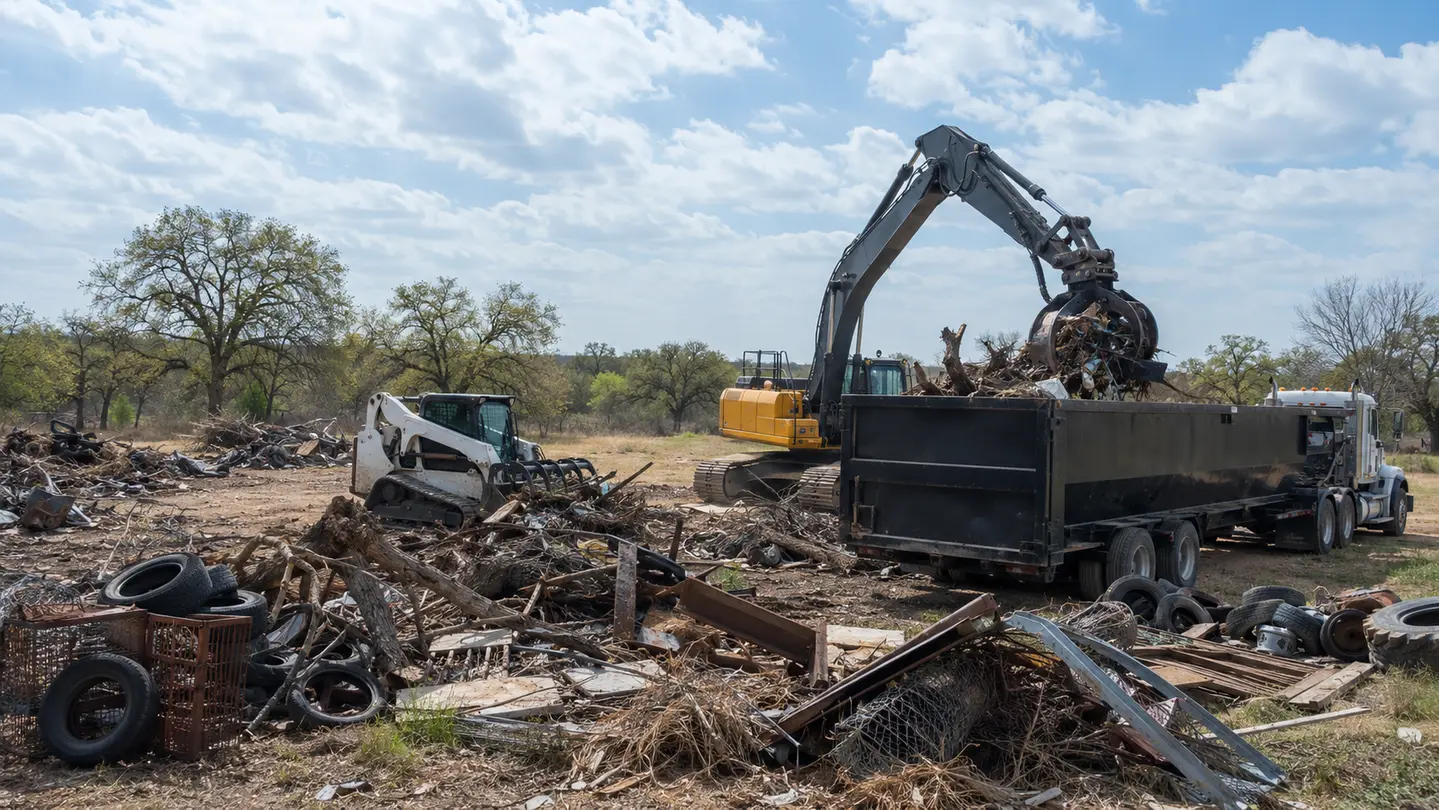
Why acreage is not a complete pricing method
Ten open acres with one concentrated debris area can cost far less to clean than two acres containing a house, slab, several outbuildings, equipment, tires, wire, brush, and mixed dumping. Acreage matters because it affects travel and consolidation across the property, but it does not measure weight, demolition, specialty handling, or hauling cycles.
A useful evaluation separates visible work into zones and material streams. Structures, concrete, machinery, vegetation, metal, tires, general debris, and suspected regulated material may require different equipment and destinations. Pricing the whole tract as one generic pile usually hides the most expensive conditions.
The factors that change equipment and hauling cost
Gate width, internal roads, slopes, mud, overhead lines, turning space, loading distance, and road-bearing capacity determine whether the most productive equipment and trucks can reach the material. When access is limited, smaller machinery may need more production time or material may need to be moved twice before it can be hauled.
Volume is only part of hauling. Concrete, soil, roofing, and demolition material can reach legal weight limits long before a container looks full. Brush and timber may occupy substantial volume at lower weight. Mixed loads can also be rejected or charged differently when tires, liquids, batteries, refrigerants, chemicals, or other restricted material are present.
Demolition and final-condition decisions
Structure pricing depends on size, construction, contents, foundation type, utility status, access, permits, environmental concerns, and the distance to an approved destination. A low demolition number may exclude interior contents, slabs, piers, concrete, backfill, imported material, or final grading.
The requested finish directly affects cost. Removing visible piles is different from searching marked acreage, removing foundations, backfilling voids, clearing fence lines, hauling vegetation, and rough-grading disturbed areas. Owners should compare proposals by the finished condition—not only the opening price.
How to obtain a useful evaluation
Start with the address, acreage, reason for cleanup, and intended next use. Provide wide photos or video of entrances, internal roads, every structure, equipment, fencing, concrete, vegetation, dumping, and areas where material may be buried or concealed. Identify what stays and what must be protected.
Complex properties may require an on-site evaluation before a responsible scope can be written. A strong proposal states work limits, known exclusions, material assumptions, equipment and hauling expectations, specialty concerns, change conditions, and the condition expected at handoff.
Property Cleanup Cost Questions
Can large property cleanup be priced by the load?
Only simple, visible material may fit load-based pricing. Acreage cleanup involving structures, machinery, concrete, brush, scattered debris, or specialty material should be evaluated as a complete project.
Does salvage value automatically reduce the cleanup price?
Not automatically. Condition, ownership, loading, transport, market value, processing time, and destination all matter. Salvage assumptions should be written into the scope rather than treated as guaranteed credit.
Can a large cleanup be completed in phases?
Yes. Work can be prioritized by safety, sale preparation, access, structure removal, development schedule, or available budget when each phase has clear limits and a defined finish.
Use This Guide to Prepare for an Evaluation
General information is a starting point. A responsible cleanup plan must account for the actual property, authority to approve the work, structures and material, access, utilities, specialty concerns, equipment and hauling needs, disposal destinations, and the required handoff.
Call Texas Property Cleanup at 817-818-JUNK or text project photos with the location, approximate acreage, and a description of what the property needs to become.