Excavation & Dirt Work for Cresson Properties
Cresson properties can combine ranch land, older homesites, material yards, commercial frontage, and tracts moving toward development. After structures and debris are removed, concrete, foundations, buried material, excavation voids, damaged access, and uneven work areas may still prevent the property from reaching its next use.
Texas Property Cleanup coordinates excavation and dirt work as part of a defined cleanup outcome. The service is not represented as engineered civil construction unless qualified providers, plans, testing, and specifications are expressly included.
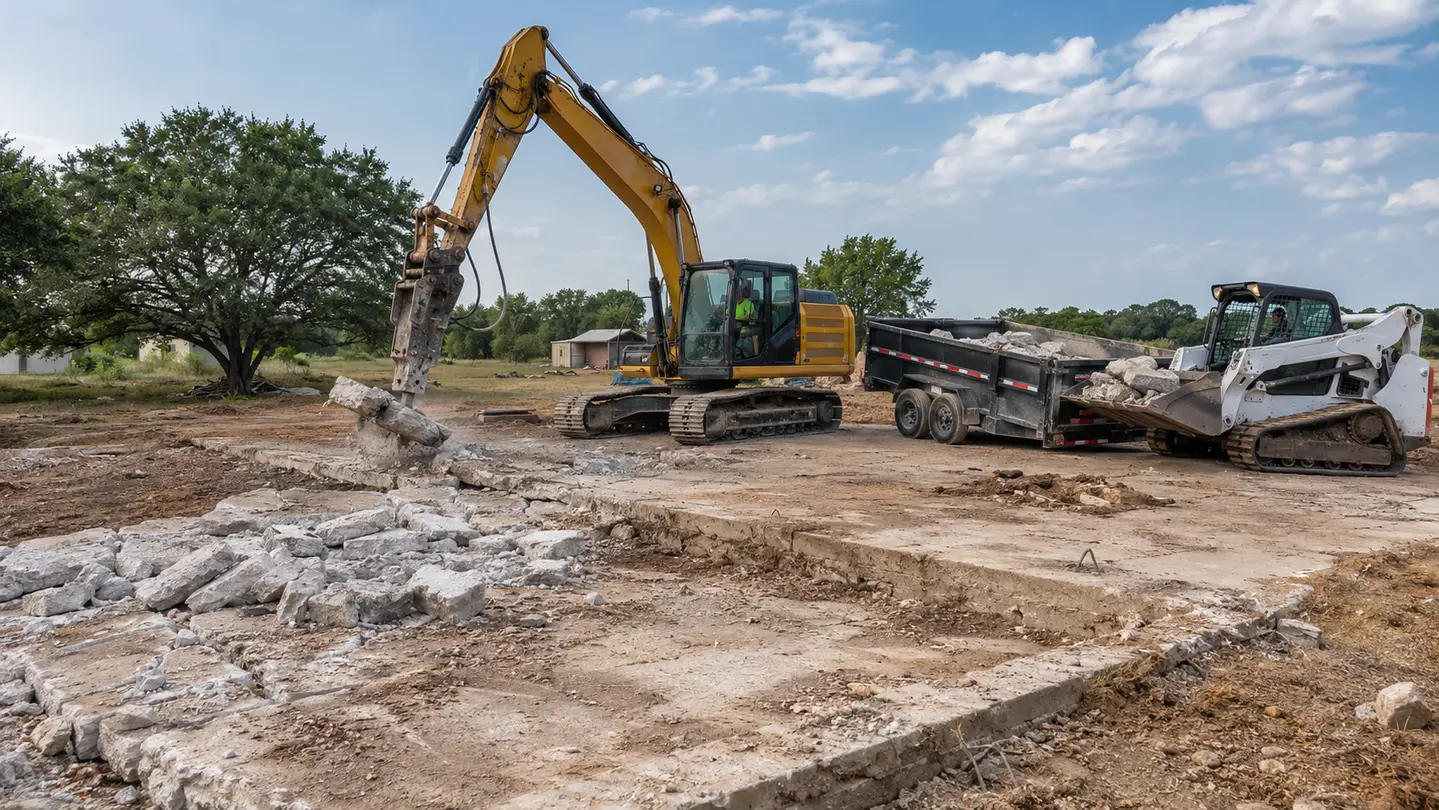
Cresson Cleanup Work Must Match the Next Property Step
A rural Cresson site may require equipment access across gates, pasture roads, drainage, or soft ground, while a corridor or commercial tract may have tighter staging, traffic exposure, utilities, neighboring improvements, and a schedule tied to survey or construction.
Soil and hidden conditions cannot be assumed from the surface. Buried concrete, old foundations, burn areas, dumped material, tanks, utilities, unsuitable fill, and contaminated soil may change the plan and require separate evaluation or specialty resources.
Work That Can Be Included
- Concrete slab, footing, pier, foundation, pad, and trough removal
- Excavation of identified buried debris and structure remnants
- Treatment of demolition holes and cleanup excavation voids
- Imported fill placement when source and quantity are defined
- Rough grading of disturbed cleanup areas
- Basic equipment-access improvement tied to the cleanup
- Loading and hauling of concrete, soil, and excavated material
- Coordination with demolition, debris removal, and the next site milestone
Projects We Evaluate in the Cresson Area
Post-demolition finish
Remove remaining concrete or foundations, treat voids, place agreed fill, and rough-grade the disturbed area.
Buried-debris cleanup
Excavate identified dumping or remnants that cannot be recovered from the surface.
Access for cleanup resources
Improve a defined route enough for equipment and hauling required by the property project.
Rough site handoff
Leave designated cleanup areas in an agreed non-engineered rough condition for the owner's next decision.
Information That Builds a Useful Scope
- Identify utilities, wells, septic systems, tanks, easements, surveys, drainage, boundaries, and known environmental concerns before excavation.
- Define exact excavation limits, concrete or material removed, acceptable fill source, approximate finish, and haul destination.
- Distinguish cleanup-grade rough work from engineered grading, drainage design, structural fill, pad construction, compaction testing, and certification.
- Document what happens if unknown material, unsuitable soil, utilities, contamination, or deeper foundations are discovered.
How the Right Resources Are Organized
Texas Property Cleanup evaluates the complete site and organizes resources around the actual work. Depending on the property, that may involve demolition contractors, equipment operators, trucking and containers, salvage or recycling outlets, disposal facilities, vegetation resources, concrete handling, or specialty providers. The project is not forced into one crew or equipment package that does not fit the conditions.
The owner receives a defined point of contact for the work limits, retained property, major material streams, expected handoff, and changes that require approval. This project-led approach is especially useful when several trades or hauling routes must work toward one finished condition.
Define the Finished Condition
The excavation handoff must distinguish appearance from engineering performance. A rough cleanup grade can restore a practical surface after demolition or debris removal, but it does not certify drainage, compaction, elevation, bearing capacity, or building-pad suitability unless those services are separately designed, tested, and documented.
Pricing a Cresson Project
Pricing follows the real scope rather than a generic acreage or truckload rate. Structures, material volume and weight, equipment, access, terrain, haul distance, disposal requirements, specialty handling, permits or utility responsibilities, and the requested finish can all change cost. Wide photographs, video, and a marked property map make the initial conversation more useful, but complex sites may require an on-site evaluation.
Read the large property cleanup cost guide for a detailed breakdown of the variables, or review the primary excavation & dirt work service page for broader service information.
Cresson Excavation & Dirt Work Questions
Is cleanup grading the same as engineered site grading?
No. Engineered elevations, drainage, structural fill, compaction testing, and certified pads require separate plans and qualified services unless expressly included.
Can demolition foundations be removed and backfilled?
Yes. Foundation limits, utility status, debris removal, void treatment, fill source, quantity, and rough finish should be defined.
Can buried debris be excavated?
Known or suspected areas can be evaluated, but unknown depth, material type, utilities, contamination, and disposal requirements may change the scope.
Can excavation be coordinated with property cleanup?
Yes. It is often most useful when concrete, demolition, heavy debris, access, backfill, and rough site finish are planned together.
Request a Cresson Property Evaluation
Call Texas Property Cleanup at 817-818-JUNK or text project photos. Include the property location, approximate acreage, major structures and material, access, known specialty concerns, retained property, and the condition needed after cleanup.