Brush Clearing for Springtown Properties
Springtown-area acreage commonly has brush and volunteer growth woven through old fencing, structures, stored material, storm debris, and access lanes. Simply cutting vegetation can expose a second project—or leave piles that still block the property and create hauling or fire concerns.
Texas Property Cleanup evaluates what vegetation remains, what is removed, how cut material is handled, where machinery and trucks can travel, and whether wire, dumping, concrete, or other debris exposed during clearing is part of the scope.
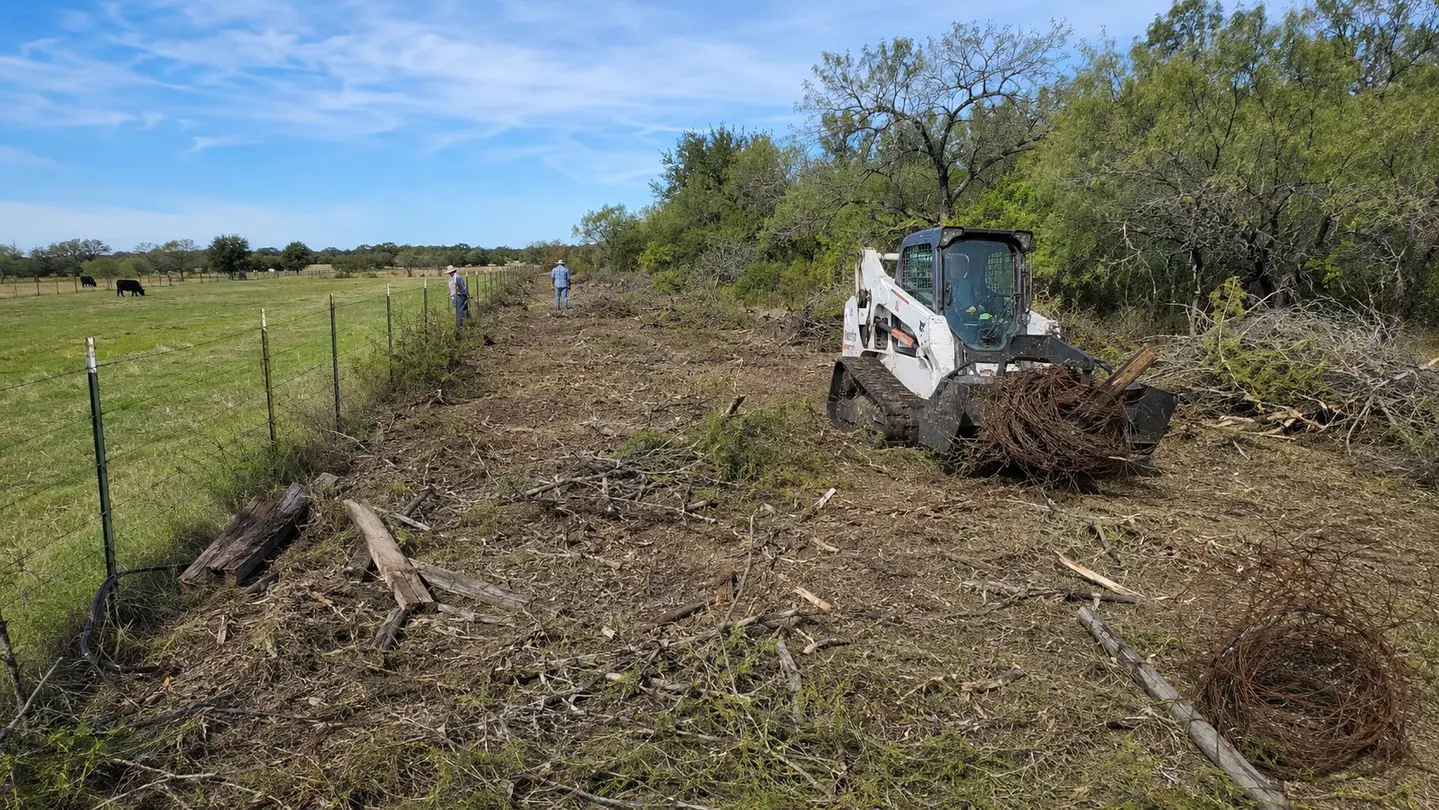
Springtown Clearing Often Overlaps Ranch and Property Cleanup
Semi-rural properties crossing the Parker and Wise County area may include livestock fencing, workshops, trailers, corrals, tanks, and several acres of unmanaged growth. Gate width, road condition, wet ground, low branches, utilities, and proximity to homes affect the clearing method.
Fence-line work deserves special attention because wire and posts can be hidden in brush or wrapped through tree growth. Removing vegetation without accounting for metal can damage equipment and leave unsafe material behind.
Work That Can Be Included
- Dense brush, volunteer trees, vines, and overgrowth
- Existing brush piles, burn piles, logs, and woody material
- Storm-damaged trees, deadfall, limbs, and blocked access
- Fence-line vegetation, old wire, posts, gates, and panels
- Road, gate, structure, equipment-yard, and work-area clearing
- Hidden dumping, concrete, scrap, and debris exposed by clearing
- Stumps and root balls when specifically included
- Machine consolidation, loading, hauling, chipping, or material routing
Projects We Evaluate in the Springtown Area
Fence-line reclamation
Clear vegetation and address embedded wire, posts, brush, and debris along a defined boundary or cross fence.
Access restoration
Open a route for trucks, equipment, surveys, utilities, construction, or ongoing property maintenance.
Storm cleanup
Remove fallen trees, limbs, damaged fencing, roofing, and mixed debris from acreage.
Structure and equipment access
Expose barns, sheds, trailers, machinery, concrete, or dumping before the next cleanup phase.
Information That Builds a Useful Scope
- Mark retained trees, screening vegetation, habitat areas, fences, utilities, wells, septic systems, structures, and property boundaries.
- Show wet areas, slopes, drainage crossings, narrow gates, roads, low limbs, overhead lines, and available loading space.
- Identify wire, scrap, dumping, concrete, tanks, or other material believed to be hidden in the vegetation.
- Choose the finish: cut only, consolidated piles, material hauled, stump treatment, fence-line cleanup, access width, and handling of exposed debris.
How the Right Resources Are Organized
Texas Property Cleanup evaluates the complete site and organizes resources around the actual work. Depending on the property, that may involve demolition contractors, equipment operators, trucking and containers, salvage or recycling outlets, disposal facilities, vegetation resources, concrete handling, or specialty providers. The project is not forced into one crew or equipment package that does not fit the conditions.
The owner receives a defined point of contact for the work limits, retained property, major material streams, expected handoff, and changes that require approval. This project-led approach is especially useful when several trades or hauling routes must work toward one finished condition.
Define the Finished Condition
A useful clearing scope defines the limit of work and the disposition of the cut material. It should also state whether stumps, fence material, hidden debris, smaller branches, and surface cleanup are included. Otherwise, the land can be technically cut while still being inaccessible or covered by new piles.
Pricing a Springtown Project
Pricing follows the real scope rather than a generic acreage or truckload rate. Structures, material volume and weight, equipment, access, terrain, haul distance, disposal requirements, specialty handling, permits or utility responsibilities, and the requested finish can all change cost. Wide photographs, video, and a marked property map make the initial conversation more useful, but complex sites may require an on-site evaluation.
Read the large property cleanup cost guide for a detailed breakdown of the variables, or review the primary brush clearing service page for broader service information.
Springtown Brush Clearing Questions
Do you haul brush away or only cut it?
The scope can include consolidation, loading, hauling, chipping, processing, or another defined disposition. It should not be assumed.
Can old fencing be removed during brush clearing?
Yes. Wire, posts, gates, panels, and vegetation can be addressed together when the limits and retained fencing are marked.
What happens if debris is exposed under the brush?
The proposal should state whether visible hidden debris is included, treated as a documented addition, or excluded for separate evaluation.
Can clearing open a road or future work area?
Yes. The required access width, retained trees, surface expectations, and future use should be defined before work begins.
Request a Springtown Property Evaluation
Call Texas Property Cleanup at 817-818-JUNK or text project photos. Include the property location, approximate acreage, major structures and material, access, known specialty concerns, retained property, and the condition needed after cleanup.