Demolition for Fort Worth Properties
A Fort Worth demolition project is not complete when the structure is on the ground. Contents, utilities, permits, environmental concerns, neighboring improvements, debris loading, haul routes, foundations, backfill, and the final condition must be addressed before work begins.
Texas Property Cleanup evaluates demolition as one part of the complete property outcome. A rural structure on the city's edge may be paired with acreage debris and vegetation, while an infill or commercial site may require controlled work limits, tighter staging, and coordination with the next contractor or development milestone.
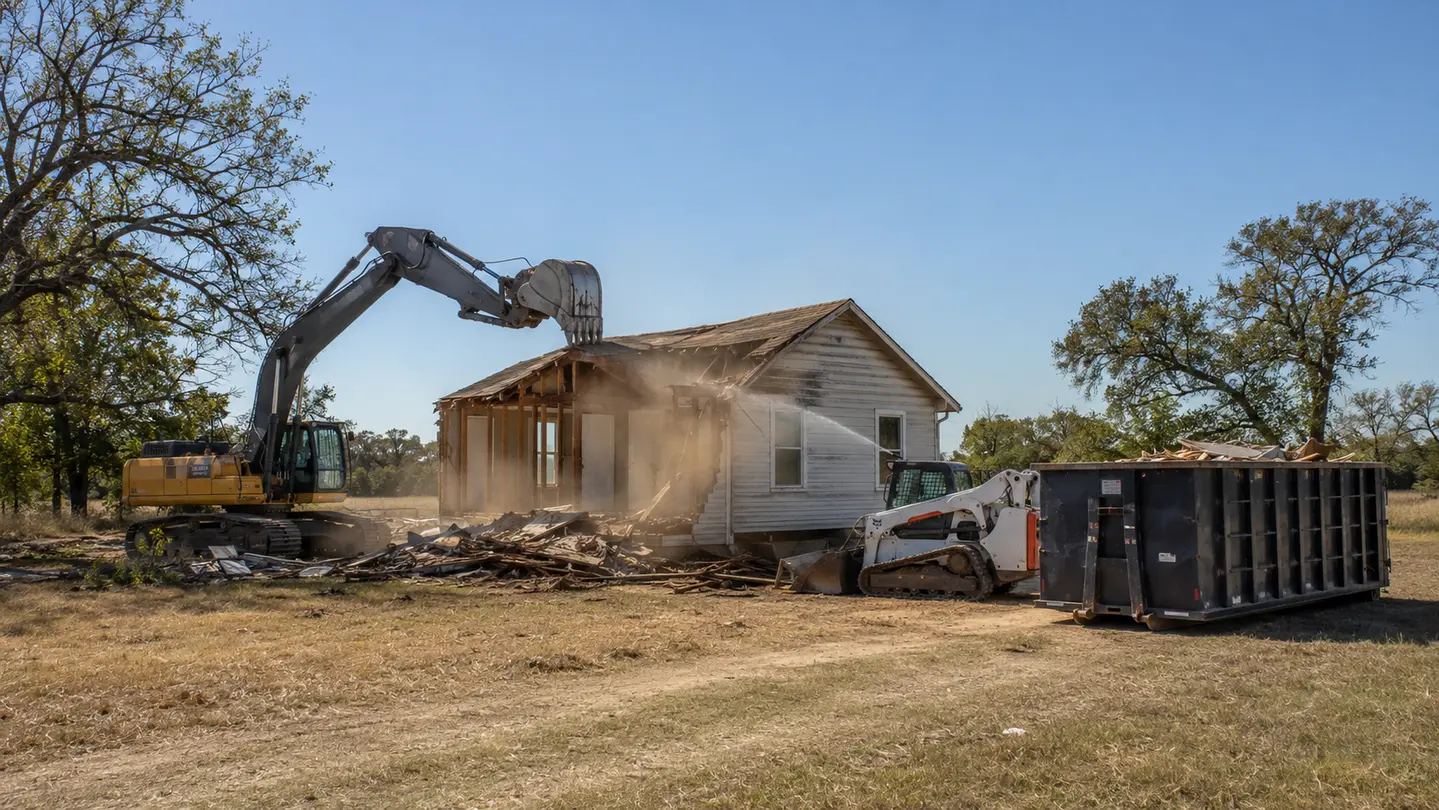
Fort Worth Demolition Conditions Vary by Site
Developed Fort Worth sites can place utilities, traffic, occupied neighboring property, sidewalks, fences, drainage, and limited loading space close to the structure. Western or southern acreage may provide more room but introduce longer equipment routes, soft access, dumping, auxiliary buildings, wells, septic systems, or vegetation around the work area.
Permit, utility, survey, and environmental requirements depend on the structure and jurisdiction. They must be confirmed for the actual address; no responsible proposal should assume that every Fort Worth building can be removed under the same process.
Work That Can Be Included
- House, garage, shed, shop, barn, and outbuilding demolition
- Mobile-home, manufactured-home, deck, porch, and carport removal
- Selected commercial and obsolete site-structure removal
- Interior contents and surrounding debris when defined in the scope
- Slab, pier, footing, foundation, driveway, and concrete removal
- Utility coordination, permit responsibilities, and required pre-work documentation
- Debris separation, machine loading, hauling, recycling, and disposal
- Backfill, rough grading, access cleanup, and handoff to the next phase
Projects We Evaluate in the Fort Worth Area
Unsafe residential structure
Remove a fire-damaged, storm-damaged, collapsed, or severely deteriorated building with a defined debris and foundation plan.
Infill redevelopment
Clear an obsolete improvement while controlling work limits around utilities, roads, fences, and neighboring property.
Acreage structure removal
Combine a house, barn, mobile home, or outbuilding removal with surrounding brush, fencing, equipment, and debris.
Commercial site transition
Remove selected structures and obstacles in sequence with access, material handling, and the next contractor's requirements.
Information That Builds a Useful Scope
- Confirm ownership authority, boundaries, surveys, permits, utility status, and responsibilities before mobilization.
- Identify asbestos-containing material, lead, refrigerants, tanks, chemicals, oils, contaminated soil, and other specialty concerns before general demolition.
- Document neighboring structures, overhead and underground utilities, access, staging, traffic exposure, and the planned debris route.
- State whether contents, slabs, piers, foundations, concrete, excavation voids, imported fill, rough grade, and final surface debris are included.
How the Right Resources Are Organized
Texas Property Cleanup evaluates the complete site and organizes resources around the actual work. Depending on the property, that may involve demolition contractors, equipment operators, trucking and containers, salvage or recycling outlets, disposal facilities, vegetation resources, concrete handling, or specialty providers. The project is not forced into one crew or equipment package that does not fit the conditions.
The owner receives a defined point of contact for the work limits, retained property, major material streams, expected handoff, and changes that require approval. This project-led approach is especially useful when several trades or hauling routes must work toward one finished condition.
Define the Finished Condition
The demolition handoff should be written in measurable terms. It may be structure and debris removal only, or it may include contents, foundations, concrete, backfill, rough grading, and cleanup of the disturbed work area. Engineered fill, compaction testing, drainage design, and certified pad work are separate unless specifically provided by qualified resources.
Pricing a Fort Worth Project
Pricing follows the real scope rather than a generic acreage or truckload rate. Structures, material volume and weight, equipment, access, terrain, haul distance, disposal requirements, specialty handling, permits or utility responsibilities, and the requested finish can all change cost. Wide photographs, video, and a marked property map make the initial conversation more useful, but complex sites may require an on-site evaluation.
Read the large property cleanup cost guide for a detailed breakdown of the variables, or review the primary demolition service page for broader service information.
Fort Worth Demolition Questions
Do Fort Worth demolition projects require permits?
Requirements vary by address, structure type, utilities, and jurisdiction. The applicable requirements and responsible party must be confirmed for the specific project.
Does demolition automatically include the slab?
No. Slabs, piers, footings, foundations, driveways, and other concrete should be listed explicitly.
Can demolition include surrounding property cleanup?
Yes. Contents, fencing, brush, equipment, dumping, concrete, and other site material can be coordinated under the larger scope.
Can a demolished area be backfilled and rough-graded?
Yes, when the fill source, void treatment, rough-finish expectation, and any separate engineering requirements are defined.
Related Local Cleanup Guides
Request a Fort Worth Property Evaluation
Call Texas Property Cleanup at 817-818-JUNK or text project photos. Include the property location, approximate acreage, major structures and material, access, known specialty concerns, retained property, and the condition needed after cleanup.