Commercial Site Cleanup for Fort Worth Properties
Commercial site cleanup has to support a real business, sale, or construction milestone. Removing the obvious material without addressing obsolete improvements, concrete, access, utilities, vegetation, scattered debris, and the required handoff can leave the next team unable to proceed.
Texas Property Cleanup organizes the site by work zone and outcome. Owners, property managers, investors, brokers, contractors, and development teams can define what remains, what is removed, which areas must stay accessible, and what condition the property needs for survey, due diligence, grading, construction, marketing, or another contractor.
Fort Worth Sites Need Controlled Logistics
Fort Worth commercial tracts range from developed infill parcels with limited staging to larger western and southern properties that resemble rural cleanup. Traffic, public visibility, occupied neighbors, utilities, security, dust, truck routes, and working-hour restrictions can affect the sequence.
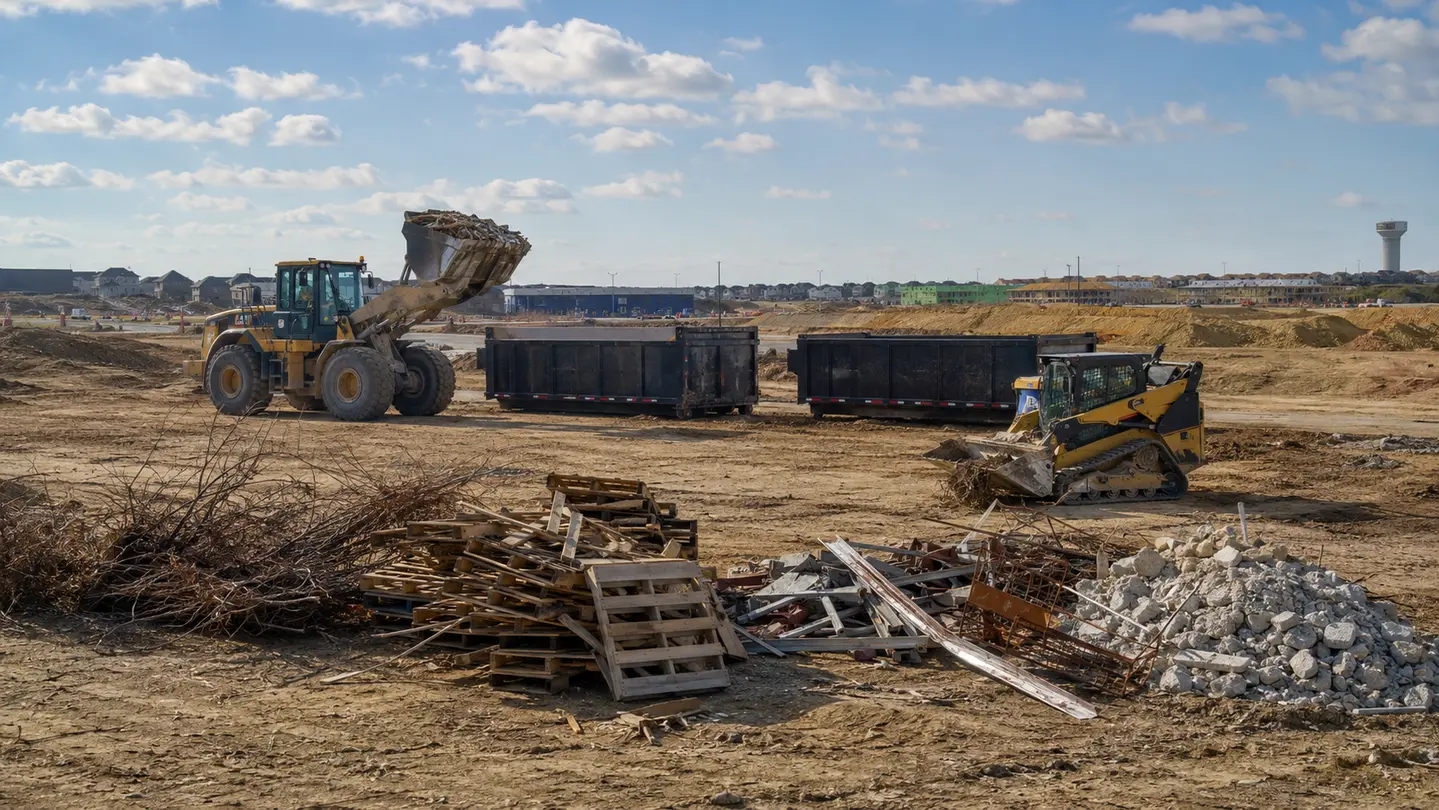
Exterior storage and legacy material may include metal, pallets, concrete, equipment, containers, construction debris, vegetation, and illegal dumping. Separating those streams and maintaining safe access can be more important than simply moving the largest pile first.
Work That Can Be Included
- Exterior storage, abandoned material, pallets, containers, and equipment
- Illegal dumping, construction debris, scrap, concrete, and heavy mixed waste
- Obsolete sheds, offices, outbuildings, pads, and selected improvements
- Brush, volunteer growth, storm debris, fence lines, and blocked access
- Work-zone consolidation, machine loading, containers, trucking, and routing
- Concrete, foundations, buried obstacles, and cleanup excavation
- Backfill and rough cleanup grading tied to the next site milestone
- Phased cleanup around active operations, due diligence, or construction schedules
Projects We Evaluate in the Fort Worth Area
Property sale or due diligence
Remove visible liabilities and open defined access for buyers, inspectors, surveyors, and decision-makers.
Redevelopment preparation
Clear obsolete improvements and site obstacles before demolition, utilities, grading, or new construction.
Active commercial-property reset
Organize work by zone so cleanup can occur around retained operations and access.
Abandoned or distressed tract
Address dumping, exterior storage, vegetation, concrete, structures, and material left from earlier use.
Information That Builds a Useful Scope
- Obtain a marked site plan or map showing work limits, retained improvements, utilities, access routes, and the required handoff areas.
- Identify security, traffic, neighboring operations, working-hour, dust, noise, and truck-staging limitations.
- Separate concrete, metal, vegetation, general debris, equipment, and specialty material into realistic handling routes.
- Coordinate the finish with the next surveyor, contractor, buyer, lender, property manager, or development team.
How the Right Resources Are Organized
Texas Property Cleanup evaluates the complete site and organizes resources around the actual work. Depending on the property, that may involve demolition contractors, equipment operators, trucking and containers, salvage or recycling outlets, disposal facilities, vegetation resources, concrete handling, or specialty providers. The project is not forced into one crew or equipment package that does not fit the conditions.
The owner receives a defined point of contact for the work limits, retained property, major material streams, expected handoff, and changes that require approval. This project-led approach is especially useful when several trades or hauling routes must work toward one finished condition.
Define the Finished Condition
A useful commercial handoff is tied to what happens next. The scope should identify cleared work zones, removed obstacles, retained access, concrete treatment, visible-debris standards, rough surface condition, and any exclusions the next contractor or owner must address.
Pricing a Fort Worth Project
Pricing follows the real scope rather than a generic acreage or truckload rate. Structures, material volume and weight, equipment, access, terrain, haul distance, disposal requirements, specialty handling, permits or utility responsibilities, and the requested finish can all change cost. Wide photographs, video, and a marked property map make the initial conversation more useful, but complex sites may require an on-site evaluation.
Read the large property cleanup cost guide for a detailed breakdown of the variables, or review the primary commercial site cleanup service page for broader service information.
Fort Worth Commercial Site Cleanup Questions
Can a Fort Worth commercial cleanup be phased?
Yes. Work can be divided by area, material type, operational priority, sale deadline, or construction milestone.
Do you coordinate with owners and contractors?
Yes. The cleanup can be organized around documented work limits and a required handoff supplied by the owner, manager, broker, contractor, or development team.
Can obsolete structures and concrete be included?
Yes. Demolition, slab or foundation removal, concrete hauling, excavation, backfill, and rough cleanup grading can be included when defined.
Is this ordinary construction-site housekeeping?
No. The focus is substantial site cleanup involving heavy material, obsolete improvements, dumping, exterior accumulation, vegetation, or equipment-based work.
Related Local Cleanup Guides
Request a Fort Worth Property Evaluation
Call Texas Property Cleanup at 817-818-JUNK or text project photos. Include the property location, approximate acreage, major structures and material, access, known specialty concerns, retained property, and the condition needed after cleanup.