Ranch Cleanup for Weatherford Properties
Ranch cleanup around Weatherford is rarely concentrated in one pile. Material may be spread among a headquarters, barn row, corrals, equipment yard, fence lines, stock-tank area, old homesite, and remote dumping location. Some items have value or remain part of the operation; others require dismantling, demolition, machine loading, or specialty transport.
The cleanup plan begins by distinguishing active ranch systems from obsolete improvements. Gates, water, livestock routes, usable fencing, retained machinery, and occupied areas are marked before work zones are sequenced. This makes it possible to address major accumulation without treating a working ranch like an unrestricted demolition site.
Planning Around Weatherford Ranch Access and Operations
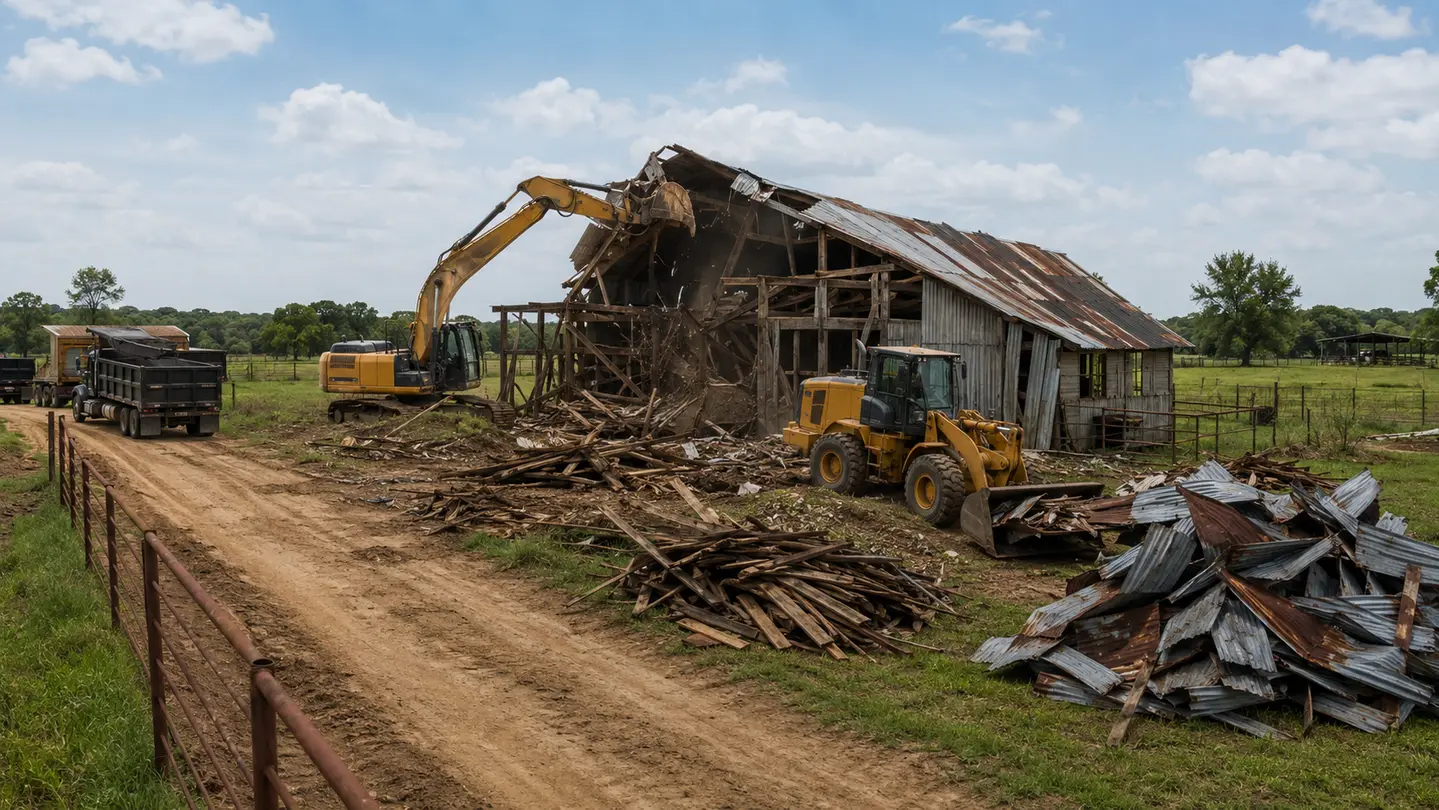
Parker County ranch access ranges from dependable all-weather roads to narrow entrances, low branches, soft pasture routes, drainage crossings, and limited truck-turning space. The safest loading area may be far from the material, which affects equipment movement and the number of handling steps.
Weatherford's growth also places some ranches next to newer development and busier roads. Those properties may require tighter staging, deliberate haul routes, dust awareness, and protection for neighbors or retained improvements while still handling agricultural-scale material.
Work That Can Be Included
- Barns, loafing sheds, tack rooms, shops, lean-tos, and ranch outbuildings
- Corrals, chutes, pens, panels, gates, posts, pipe, and wire fencing
- Tractors, implements, trailers, feeders, tanks, and non-running equipment
- Scrap metal, lumber, roofing, tires, stored materials, and ranch debris
- Brush piles, deadfall, storm-damaged trees, and obstructed access
- Concrete troughs, pads, slabs, piers, and obsolete foundations
- Machine loading, hauling, salvage separation, and specialty material routing
- Final work-zone cleanup tied to the ranch's continuing or future use
Projects We Evaluate in the Weatherford Area
Ranch sale preparation
Remove obsolete improvements and visible accumulation while preserving the features buyers need to evaluate.
Inherited ranch headquarters
Sort retained family and ranch property before clearing unsafe buildings, unused equipment, wire, tires, and debris.
Working-area reset
Reclaim an equipment yard, barn area, corral complex, or route needed for current operations.
Storm-damaged ranch
Coordinate damaged structures, trees, fencing, roofing, and mixed debris across several work zones.
Information That Builds a Useful Scope
- Identify livestock areas, active gates, water systems, utilities, and routes that must stay open during the work.
- Create a retained-equipment list before machinery, implements, scrap, and stored metal are moved.
- Show gate width, road base, low limbs, creek or drainage crossings, slopes, mud, and truck-turning areas in the initial photos.
- State whether fence lines, concrete, foundations, brush, smaller debris, and disturbed ground are included in the final condition.
How the Right Resources Are Organized
Texas Property Cleanup evaluates the complete site and organizes resources around the actual work. Depending on the property, that may involve demolition contractors, equipment operators, trucking and containers, salvage or recycling outlets, disposal facilities, vegetation resources, concrete handling, or specialty providers. The project is not forced into one crew or equipment package that does not fit the conditions.
The owner receives a defined point of contact for the work limits, retained property, major material streams, expected handoff, and changes that require approval. This project-led approach is especially useful when several trades or hauling routes must work toward one finished condition.
Define the Finished Condition
The finished ranch should preserve active systems and retained property while clearing the agreed structures, equipment, fencing, brush, and debris zones. A clear scope prevents a headquarters from being visually improved while wire, concrete, tires, or remote material remain outside the quoted work limits.
Pricing a Weatherford Project
Pricing follows the real scope rather than a generic acreage or truckload rate. Structures, material volume and weight, equipment, access, terrain, haul distance, disposal requirements, specialty handling, permits or utility responsibilities, and the requested finish can all change cost. Wide photographs, video, and a marked property map make the initial conversation more useful, but complex sites may require an on-site evaluation.
Read the large property cleanup cost guide for a detailed breakdown of the variables, or review the primary ranch cleanup service page for broader service information.
Weatherford Ranch Cleanup Questions
Can a Weatherford ranch remain operational during cleanup?
Potentially. Livestock, gates, water, active work areas, access routes, and scheduling constraints must be identified so the plan can protect continuing operations.
Do you remove old corrals and fence lines?
Yes. Defined sections of wire, posts, panels, pipe, gates, corrals, pens, and chutes can be included.
Can non-running tractors and implements be removed?
Yes. Weight, condition, access, loading method, ownership, and transport requirements are evaluated before equipment is added to the scope.
Can ranch cleanup be completed in phases?
Yes. A large property can be divided by headquarters, structure area, equipment yard, fence line, dumping zone, or another priority.
Related Local Cleanup Guides
Request a Weatherford Property Evaluation
Call Texas Property Cleanup at 817-818-JUNK or text project photos. Include the property location, approximate acreage, major structures and material, access, known specialty concerns, retained property, and the condition needed after cleanup.