Heavy Debris Removal for Weatherford Properties
Heavy debris is different from a household cleanout. Weatherford-area sites may contain demolished structures, broken concrete, roofing, lumber, scrap, tires, equipment parts, dumped household material, vegetation, and soil mixed together across a large work area. Weight and material type—not visual volume alone—determine the loading and hauling plan.
Texas Property Cleanup evaluates how the debris can be reached, separated, loaded, transported, and routed. Metal, concrete, vegetation, tires, equipment, general waste, and suspected specialty material may require different equipment and destinations rather than one mixed load.
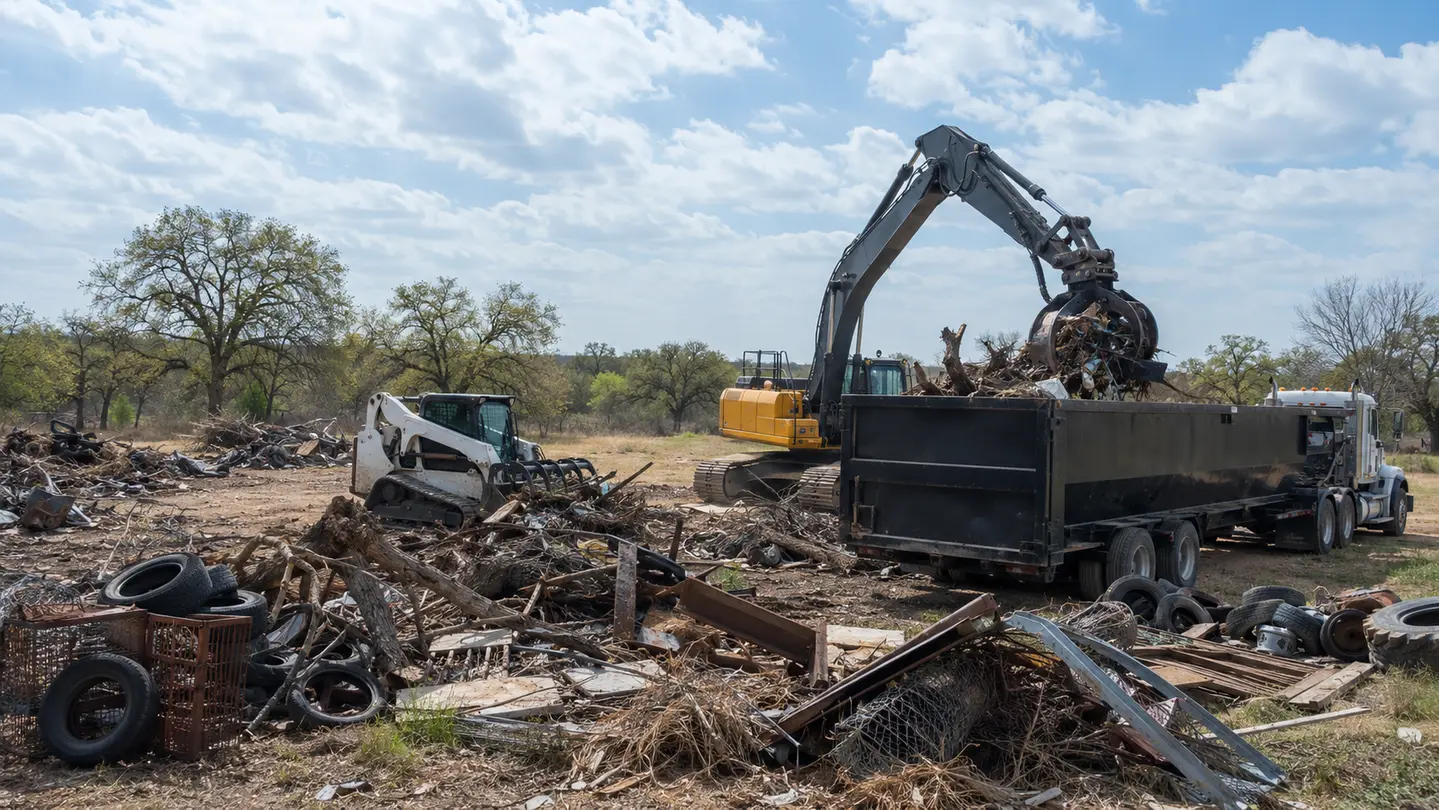
Weatherford Hauling Starts With Access and Material Routing
A rural Parker County dumping area may sit beyond a narrow gate or at the end of an unimproved road. Material hidden in a tree line or drainage area may need to be consolidated before trucks can be loaded. Sites nearer developed Weatherford may have less staging space and tighter limits around roads, neighbors, and utilities.
Disposal routes and load weight matter. Dense demolition material and concrete can reach legal weight limits before a container looks full, while brush and storm material consume capacity differently. Sorting the work by material stream can prevent rejected loads and repeated handling.
Work That Can Be Included
- Illegal dumping and scattered acreage debris
- Construction and demolition material
- Concrete, masonry, roofing, lumber, and damaged improvements
- Scrap metal, equipment parts, wire, tanks, and oversized items
- Tires, appliances, household accumulation, and mixed waste
- Storm debris, logs, brush piles, and fallen-tree material
- Machine consolidation, loading, containers, trucks, and haul planning
- Recovery of visible debris exposed after piles or vegetation are removed
Projects We Evaluate in the Weatherford Area
Acreage dumping cleanup
Recover mixed material from marked tree lines, low areas, road frontage, or remote portions of a tract.
Post-demolition hauling
Separate and remove structure debris, concrete, metal, contents, and material uncovered around the foundation.
Heavy estate accumulation
Clear machinery, scrap, tires, outdoor storage, and dense material that exceeds ordinary cleanout capability.
Storm and property-damage cleanup
Consolidate fallen trees, roofing, damaged fencing, structure material, and other heavy debris.
Information That Builds a Useful Scope
- Photograph the full debris field and access route, not only the closest or largest pile.
- Identify tires, batteries, liquids, cylinders, tanks, chemicals, refrigerants, unknown drums, and suspected contaminated material before loading.
- Estimate whether material is surface accumulation or may continue below vegetation, soil, collapsed structures, or existing piles.
- Define whether final machine cleanup, concrete removal, excavation, backfill, or rough grading is part of the handoff.
How the Right Resources Are Organized
Texas Property Cleanup evaluates the complete site and organizes resources around the actual work. Depending on the property, that may involve demolition contractors, equipment operators, trucking and containers, salvage or recycling outlets, disposal facilities, vegetation resources, concrete handling, or specialty providers. The project is not forced into one crew or equipment package that does not fit the conditions.
The owner receives a defined point of contact for the work limits, retained property, major material streams, expected handoff, and changes that require approval. This project-led approach is especially useful when several trades or hauling routes must work toward one finished condition.
Define the Finished Condition
Heavy debris removal should end with a defined search area and finish standard. The proposal should distinguish visible pile removal from cleanup of material exposed underneath, surrounding scattered debris, buried material, vegetation, concrete, and damage that may require excavation or backfill.
Pricing a Weatherford Project
Pricing follows the real scope rather than a generic acreage or truckload rate. Structures, material volume and weight, equipment, access, terrain, haul distance, disposal requirements, specialty handling, permits or utility responsibilities, and the requested finish can all change cost. Wide photographs, video, and a marked property map make the initial conversation more useful, but complex sites may require an on-site evaluation.
Read the large property cleanup cost guide for a detailed breakdown of the variables, or review the primary heavy debris removal service page for broader service information.
Weatherford Heavy Debris Removal Questions
Is heavy debris removal priced by the truckload?
Not responsibly without evaluating weight, material types, loading, access, haul distance, destination requirements, and the requested finish.
Can concrete and demolition debris be removed together?
They can be part of one project, but they may be loaded and routed separately because density, disposal, recycling, and legal weight limits differ.
Do you handle illegal dumping on acreage?
Yes. The evaluation should identify every known dumping zone, access to each area, visible specialty material, and whether buried debris is suspected.
What should I send for an initial estimate?
Send wide photos or video of every material area plus the entrance, gates, roads, loading space, nearby improvements, and anything requiring specialty handling.
Related Local Cleanup Guides
Request a Weatherford Property Evaluation
Call Texas Property Cleanup at 817-818-JUNK or text project photos. Include the property location, approximate acreage, major structures and material, access, known specialty concerns, retained property, and the condition needed after cleanup.