What This Service Covers
Large-property debris is rarely uniform. Loads can contain demolition material, concrete, roofing, lumber, fencing, scrap metal, tires, brush, soil, appliances, equipment parts, and general waste. Weight, contamination, access, and disposal restrictions determine how the work must be handled.
Texas Property Cleanup evaluates the material before assigning trucks and equipment. That helps prevent underestimating heavy loads, mixing restricted materials, damaging access roads, or leaving the owner with the most difficult portion of the site after easy material has been removed.
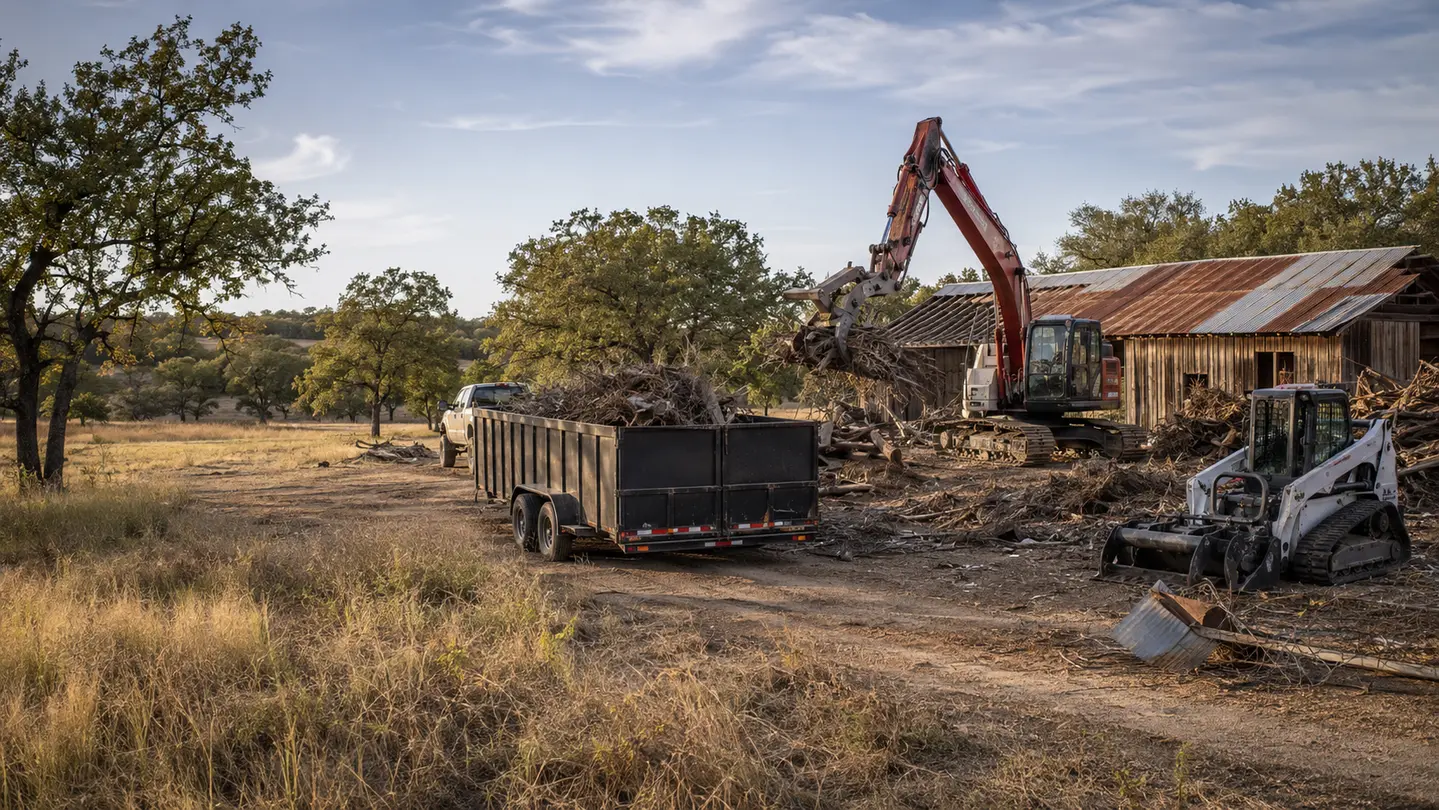
Work That Can Be Included
- Demolition, construction, and renovation debris
- Illegal dumping and scattered acreage debris
- Concrete, block, brick, stone, and heavy inert material
- Roofing, lumber, metal, fencing, wire, and mixed building material
- Storm debris, tree debris, brush, and damaged improvements
- Equipment parts, machinery, tanks, tires, and scrap
- Material hidden in vegetation, low areas, or former storage zones
- Machine loading, container service, hauling, and disposal routing
What the Work Can Involve
These additional representative scenes show common work phases and planning considerations. They illustrate service types only and are not presented as completed Texas Property Cleanup projects.
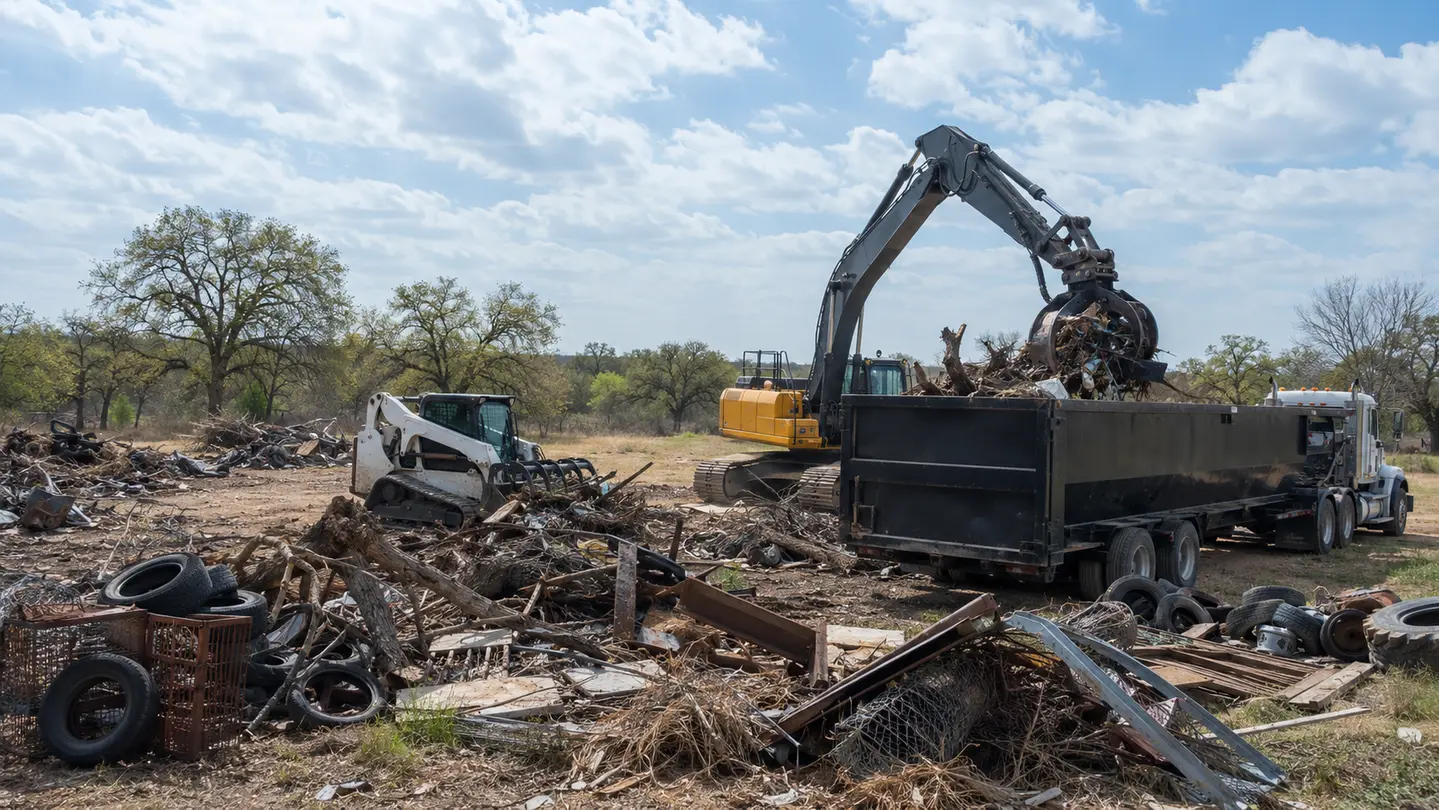

Projects We Evaluate
Illegal dump-site cleanup
Recover mixed material from road frontage, tree lines, drainage areas, and remote portions of a tract.
Demolition debris removal
Load and haul structure debris, concrete, roofing, lumber, and interior contents under a coordinated plan.
Commercial-site cleanup
Clear obsolete material, abandoned equipment, damaged storage areas, and exterior accumulation.
Storm recovery
Remove fallen trees, roofing, fencing, structural debris, and damaged contents from affected areas.
A Complete-Property Approach
Material is evaluated by type, volume, weight, location, and handling requirement. Clean metal, concrete, vegetation, general debris, tires, and specialty waste may need different destinations. Separating those streams when practical can improve production and keep the project compliant.
When several scopes overlap, we can combine this service with demolition, heavy debris removal, brush clearing, or cleanup excavation and dirt work. That gives the owner one defined finished condition instead of a collection of disconnected tasks.
How the Right Resources Are Assigned
Texas Property Cleanup is responsible for evaluating the complete scope and organizing the resources the property requires. Depending on the job, that can involve specialized demolition contractors, equipment operators, hauling companies, recycling or salvage outlets, disposal facilities, and specialty providers. The project is built around capability and site conditions rather than forcing every property into one crew or one equipment package.
The owner receives a defined point of contact for the cleanup plan, major work limits, expected handoff, and changes that arise from conditions that could not reasonably be seen before work began. This approach is especially useful on high-value projects where demolition, loading, hauling, vegetation, concrete, and excavation overlap.
What a Complete Handoff Looks Like
A complete handoff identifies the work zones searched, the visible material removed, any excluded specialty waste, and the treatment of debris exposed below piles or vegetation. Heavy material, tires, tanks, metal, vegetation, and general debris may leave through different disposal or recovery streams.
Pricing and Property Evaluation
Large cleanup projects are priced from the actual scope. Acreage, material volume and weight, structures, access, haul distance, disposal requirements, equipment needs, terrain, utilities, specialty materials, and the requested finish all matter. Photos and video are useful for an initial conversation, but complex sites may require an in-person evaluation.
Read our large property cleanup cost guide for a detailed explanation of equipment, weight, access, demolition, disposal, and finished-condition variables.
Call 817-818-JUNK with the property location, approximate acreage, major items to remove, access conditions, and what you want the site to look like when the work is complete.
Debris Removal Questions
Can you remove debris spread across several acres?
Yes. Scattered debris can be consolidated with equipment and loaded from multiple work areas when access allows.
Do you haul concrete and other heavy material?
Yes. Weight and loading conditions must be evaluated so the appropriate hauling method and disposal location are used.
What materials need special handling?
Examples may include chemicals, oils, fuel, batteries, asbestos-containing material, refrigerants, and certain tires or tanks. Suspected specialty material should be disclosed during evaluation.
Serving North Texas
Texas Property Cleanup serves Parker, Tarrant, Wise, Johnson, Hood, Palo Pinto, Jack, and Young counties, with substantial projects considered throughout the region. Visit our service-area directory for city and county details.
Debris Removal Service Areas
Use these local guides for property conditions, access, material, and planning details in priority North Texas service areas. Additional cities and counties are covered through our complete service-area directory.